Showing posts with label AUTHOR Jane Austen. Show all posts

14 November 2013

The Wonderful Wizard of You

A tweet alerted me to this service, which offers to create an edition of L. Frank Baum’s Wonderful Wizard of Oz customized for yourself or a person of your choice.

This consists of stuffing your specified names (and, curiously, eye color) into the novel’s public-domain text. I tried it out, and this is part of the resulting preview:
They walked along listening to the singing of the brightly colored birds and looking at the lovely flowers which now became so thick that the ground was carpeted with them. There were big yellow and white and blue and purple blossoms, besides great clusters of scarlet poppies, which were so brilliant in color they almost dazzled John's brown eyes.

"Aren't they beautiful?" the girl asked, as she breathed in the spicy scent of the bright flowers.

"I suppose so," answered Buckingham Scarecrow. "When I have brains, I shall probably like them better."

"If I only had a heart, I should love them," added Pablo the Tin Woodman.

"I always did like flowers," said Harold the Cowardly Lion. "They seem so helpless and frail. But there are none in the forest so bright as these."

They now came upon more and more of the big scarlet poppies, and fewer and fewer of the other flowers; and soon they found themselves in the midst of a great meadow of poppies. Now it is well known that when there are many of these flowers together their odor is so powerful that anyone who breathes it falls asleep, and if the sleeper is not carried away from the scent of the flowers, he sleeps on and on forever. But John did not know this, nor could she get away from the bright red flowers that were everywhere about; so presently her eyes grew heavy and she felt she must sit down to rest and to sleep.
I think we might agree that there’s still one bug in the system.

The same site offers to treat various other classic (i.e., public-domain) texts in the same way. That means, I presume, you can stand in for Hercule Poirot in Agatha Christie’s first mystery novel, insert your name in Jane Austen’s roundelays, or head off to Treasure Island with Long John Silver—or rather Long Jason Silver if you prefer.

COMING UP: But wait! There’s more!

14 June 2012

The First Thing We Do, Let’s Kill All the Mothers

From Dwight Garner’s review in the New York Times of Colm Tóibín’s New Ways to Kill Your Mother: Writers and Their Families:
His essential point, driven home in an essay about all the motherless heroes and heroines in the novels of Henry James and Jane Austen, is that “mothers get in the way of fiction; they take up the space that is better filled by indecision, by hope, by the slow growth of a personality.” To put it another way, he writes, “The novel is a ripe form for orphans.”
That’s long been true of children’s fiction, where even young heroes who leave the protection of home (e.g., Dorothy Gale, Huckleberry Finn, Harry Potter) don’t have living mothers to begin with. Of course, there are also many classic and popular children’s novels in which mothers are a strong presence (Little Women, the Little House books, and Harry Potter again).

21 May 2011

Reversals and Recognitions

After I posted my “Plotting Made Simple!” flow chart this week, author Kimberly Marcus emailed me to ask what the different shadings for the arrows mean. So here’s more of my workshop from last weekend’s SCBWI New England conference.

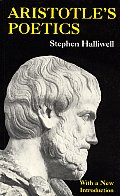
In thinking about what makes up a plot twist, I went back to one of our earliest literary critics: Aristotle in the Poetics. He wrote, according to one translator:
the most powerful elements of emotional interest in Tragedy—Peripeteia or Reversal of the Situation, and Recognition scenes—are parts of the plot. . . . A Complex action is one in which the change is accompanied by such Reversal, or by Recognition, or by both.
As I see it, Reversal is when your protagonist’s external situation changes. Suddenly he’s under arrest, or he’s been turned into a mouse, or he’s being mistaken for the President’s grandson. Reversals can be good for the protagonist, but they’re most exciting when his situation suddenly gets worse.

Recognition is when your protagonist’s internal situation changes. She sees herself, or other people, or the situation, or the world, in a new way. Those Recognitions grow out of the individual personality and situation an author has created, so it’s hard to generalize about them. But they usually link to the themes of the story.

Aristotle’s fave example was Oedipus. He suffers a Reversal when ***SPOILER ALERT*** he tumbles from being the king and hero of Thebes to being a blind outcast. And that Reversal comes about because of his Recognition that he’s killed his father and married his mother.

As that example shows, Reversal and Recognition are most powerful when they’re linked. In Oedipus’s case, Reversal follows Recognition. More often it’s the other way around: suffering a Reversal makes the protagonist realize what’s really going on, or what’s really important.

Take Jane Austen’s Emma, and another dose of SPOILER ALERT. The title character suffers Reversals when Knightley reprimands her, and then when she realizes she was wrong about the objects of Jane and Harriet’s affections—and that produces a Recognition about whom she’s in love with herself.

On my chart, the places where Reversals usually occur have gray arrows, and the places where Recognition usually occur have dotted arrows. But sometimes the arrows should be both gray and dotted.