Showing posts with label SERIES Narnia. Show all posts

16 February 2025

Wisest Thing I’ve Read Today

From Katherine Rundell’s essay “Why Children’s Books?” in the London Review of Books:

It’s easier to trust a writer who writes great food: they are a person who has paid attention to the world. Children have very little control over what or when they eat, and evolution has given them a sweet tooth far stronger than an adult’s to ensure they consume enough calories during growth spurts – of course their longings are colossal. Fictional food provokes real hunger: it makes the story into a bodily thing. Food is a way to open the door to the space in which the capacity for imaginative and intellectual freedom is built: you lure them in with real appetites.

Perhaps the best book ever written about postwar rationing is Charlie and the Chocolate Factory. Published in 1964, ten years after rationing ended in Britain, it has an entire nation’s hunger for fresh tastes and wild luxury encoded in its pages.

And there is The Lion, the Witch and the Wardrobe, written in 1950, when sugar and fruit and treats were still scarce (in 1942, according to a survey, many children did not believe that bananas were real): Edmund’s Turkish Delight stands in for every lost and longed-for glory. What child forgets the seismically disappointing discovery that the English version tastes like jellied flowers dusted in soap powder?

04 July 2012

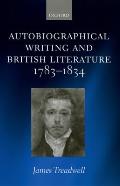
Cooper, Coleridge, and More in James Treadwell’s Advent


In its starred review for James Treadwell’s Advent, Publishers Weekly concluded, “Readers of Susan Cooper and Alan Garner will rejoice to find the first of a new trilogy worthy of sharing their shelf.” I know that’s especially gratifying for James since Cooper’s The Dark Is Rising was a touchstone for both of us growing up.

Our Q&A continues with an unseasonal discussion of the weather.

We’ve talked about winter scenes in English fantasy fiction before: Narnia under the White Queen, the blizzard that shuts down Buckinghamshire in The Dark Is Rising. Are you drawing on that tradition?

It would probably be more accurate to say that it’s drawing on me, if that doesn’t sound too affected … The instances you mention are certainly two of the most powerful fixed points in the imaginative geography I grew up with. (A third would be the snowbound planet called Winter in Ursula K Le Guin’s The Left Hand of Darkness.) I didn’t deliberately set out to echo them, but then that’s not how influence works, is it?

If my landscape made anyone think of The White Witch or Will Stanton and the Dark Rider, I’d be very happy indeed.

Advent starts with an epigraph from Coleridge:


If a man could pass through Paradise in a dream, and have a flower presented to him as a pledge that his soul had really been there, and if he found that flower in his hand when he awoke—Aye! and what then?
How did you pick that quotation, and what does Coleridge mean to you?

When I was at university, studying literature, I had a small notebook in which I scribbled down some phrases or lines that particularly struck me. I only know this because I found it a few years ago; I’d completely forgotten about it. I must only have kept it up for a few months at most. It strikes me now as a rather sophomoric thing to have done. Nevertheless, that quotation was in there, and the moment I saw it I knew it belonged to Advent.

In my former life I spent a fairly long time thinking quite intensively about Coleridge, though I don’t think that’s relevant to my book. The significance of the epigraph in relation to Advent is the unanswered — unanswerable — question into which the little visionary story collapses. Coleridge’s work has a genius for that. He’s the patron saint of tellingly failed endings.

TOMORROW: Questions of influence, and polite tussling about our different approaches to storytelling.

[The photograph above shows one of James’s sons in London back in the surprising winter of 2009.]

08 June 2011

Divided by a Common Language in Narnia


This is a detail from Amy Goldwasser and Peter Arkle’s Sketchbook page at the back of the last New York Times Book Review, headlined “Literature sue l’Herbe.” They asked different New Yorkers what they were reading in Central Park. The Lawsons were reading C. S. Lewis.

I had the same question that Matthew asks when I read about the Turkish delight in The Lion, the Witch, and the Wardrobe. And I’d never seen a wardrobe; here in America we don’t forget to build closets into houses. It’s amazing the book found any sort of American audience at all.