Where to Find the Essex County Wax Museum

This story appears in Minimum Paige, a comics anthology published by the Harvard Book Store a couple of years back. It’s also collected in Alex’s new art book.
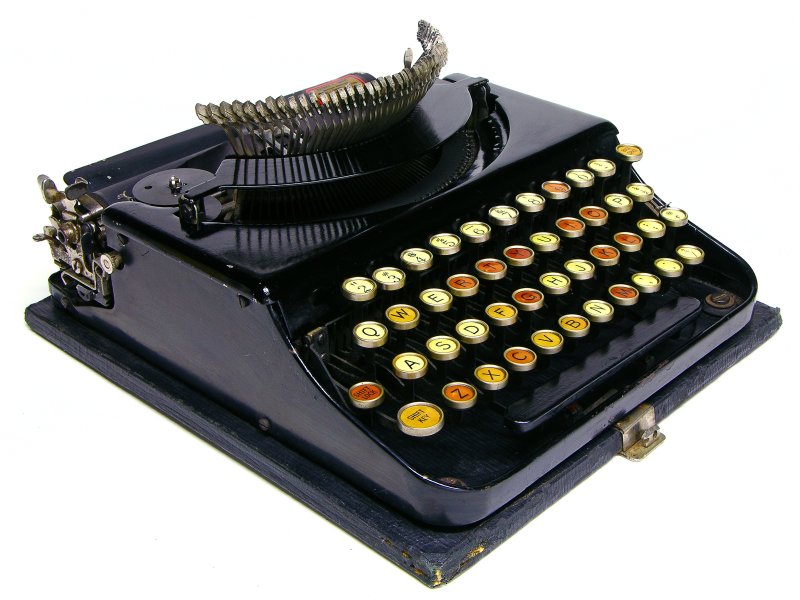
“For some reason or other, we were all spirited kids, but we didn’t have real fights,” Mr. Yudain recalled in an interview with Roll Call in 2005. “When we got mad at each other, we published these newspapers. We had a little Remington portable typewriter — I guess it was one of the first ones that came out, and we all learned how to use it, even when we were really small — and we published these newspapers, writing editorials against each other instead of staging fists or rocks or something.”Typewriters? Household newspapers? Why go to all that trouble when you can use the internet to tell the whole world about your yucky sibling?


As with most anthologies there were some stories which were more successful than others. However, under the careful eye of editors Dan Mazur and Jesse Lonergan, these variations in quality fluctuate between good and awesome. . . .Braden Lamb and I collaborated on one story in that collection, “The Greatest Spy of All Time.” Braden and his wife, Shelli Paroline, won Eisner Awards this summer for their work on Adventure Time, so I can’t argue that this publication was the highlight of the past twelve months for him, but I certainly enjoyed it.
While it is often a risk to purchase an anthology, I cannot recommend The Greatest of All Time Comics Anthology enough. It has a solid creative line up, great production values (twenty color pages in a small press book?!?!), and an enjoyable read from cover to cover!

As President Barack Obama’s administration fixes the new federal health-insurance website, it’s valuable to compare responses to that endeavor with responses to the last administration’s big foray into health benefits: Medicare Part D.
The Washington Post described how that law was enacted for President George W. Bush in 2003: “During the vote, which was of unprecedented length, the House Republican leadership cajoled, berated and twisted arms, barely controlling a conservative revolt…” A June 2004 article in the Millbank Quarterly noted that was “by far the longest known roll-call vote in the history of the House.” Majority Leader Tom DeLay promised a favor to one reluctant Republican which later brought him a public admonition from the Ethics Committee. In the end that bill passed in the House 220-215 with members of both political parties on both sides.
Almost immediately the law’s price tag changed, as the Washington Post reported in 2005:
Beginning with his January 2003 State of the Union address, Bush pledged to keep the total cost of the drug benefit to $400 billion over 10 years. An estimate by the Congressional Budget Office was close to Bush’s figure.Medicare Part D was a big contributor to the budget deficits that the Bush-Cheney administration left to its successor. (In contrast, the Congressional Budget Office estimated that the Affordable Care Act would save the federal government money over ten years because it would make our use of health care more efficient.)
But shortly after Bush signed the program into law in December 2003, the White House revised its projection to $534 billion, but it never offered a detailed breakdown of that estimate.
Last March, Richard S. Foster, Medicare's chief actuary for nearly a decade, said administration officials threatened to fire him if he disclosed his belief in 2003 that the drug package would cost $500 billion to $600 billion. . . .
As recently as September, Medicare chief Mark B. McClellan said the new drug package would cost $534 billion over 10 years. Last night, he acknowledged that the cumulative cost of the program between 2006 and 2015 will reach $1.2 trillion, but he cited several major savings and offsets that he said will reduce the federal government's bottom-line cost to $720 billion.
SCBWI New England’s “New Media Day” at the Eric Carle Museum of Picture Book Art made clear that publishing has entered a period of hybridization, combining both print and digital books published both by companies and by authors.
Despite all the stories and insights, though, my biggest takeaway was that the website Scribd.com likes to be pronounced with a short I.
Here I am with Mary Jane Begin, Gail Gauthier, and Emilie Boon, who were on a panel I moderated, and (second from left) artist Ruth Sanderson.


Lifetime has put in development Red Brick Road, from the Wolper Organization, Vertigo Entertainment and Warner Horizon. Written by Tim Schlattman (Dexter) based on an concept by artist Rob Prior and executive produced by Roy Lee and Adrian Askarieh, Red Brick Road is described as an edgy, Game Of Thrones take on the world of Wizard Of Oz.Actually, the red bricks were just the negative space around the yellow bricks, but they’ve been intriguing fans of the movie since the video era began.
In the classic 1939 feature, when Dorothy set off for the Emerald City, she followed the Yellow Brick Road. But among the yellow bricks at Dorothy’s feet, there was also a swirl of red bricks. They’ve been there the whole time in plain sight. Unnoticed. Unexplored. Which raises the question — just where do they go? Red Brick Road will answer that by following Dorothy down that fateful path, taking her to the oldest, darkest and most dangerous parts of Oz to find what became of her friends who all have gone missing.

We might even do this with Battling Boy depending on how the popularity is. My drawings are huge and a lot of the artists I meet in the industry give me the only complaint I’ve heard about Battling Boy which is that they wish it was black and white like THB where they can really see the line work.Until then, maybe one quality that makes Battling Boy a comic for kids is that their eyes can get more out of it than us readers on the aging side.

THE PULSE: Another reason this year has been hard for Nightwing is the breakup of his relationship with a very smart redhead whose book I happen to write [i.e., Barbara Gordon]. Dick’s obviously a physical character, especially lately, and I think you and other writers have clearly established that he’s not a loner. Without giving too much away, the ending of #93 had rather a shocking event in Dick’s love/sex life. Was this a one-time thing, a moment of weakness and disorientation, or is Tarantula something more to Dick?Two months later Devin Grayson had the Q&A with fans in which she referred back to this conversation: “For the record, I’ve never used the word ‘rape,’ I just said it was nonconsensual (I know, aren’t writers frustrating? *smiles*).”
GRAYSON: That particular moment was actually not consensual. Dick’s body sometimes has a mind and life of its own, and in this case, his heart was very clear (as were his words) about not wanting to be engaged that way at that time. But Catalina [a.k.a. Tarantula] overwhelms him to some extent, both physically and emotionally. He feels responsible now for, essentially, the destruction of her soul, and as of issue 93 (and this continues into 94), he’s not yet sure how to redeem her or himself, so she’s really got an odd kind of control over him while he tries to catch his breath and figure that out. She’s crystal clear about what she wants to be doing and how she wants him to factor into it – utterly undaunted by recent events – and Dick is, at this point, basically being dragged around behind her (this actually becomes literal in 94). Through a combination of shock and moral anguish, Dick has, to some extent, surrendered to her will. And in that particular situation, the sex itself was practically allegorical. I don’t mean it didn’t really happen, but rather that it was a final physical manifestation of an emotional violation that went much deeper.
from aneurysm: Theres been alot of online debate about what actually happened at the end of Nightwing #93. Was Dick raped? Was it consensual? Did they actually do anything other than a bit of dry humping? Everyone seems to be debating this and coming up with crazy explanations (the weirdest I've heard is that Tarantula drugged Dick!).I think it’s significant that Devin Grayson said she had to maintain “some necessary vagueness” and attributed her frustrating coyness in the other Q&A to being a writer. Those phrases are why I read her combination of statements as signs of a storyteller trying to balance between giving readers the information they need to interpret her narrative and not spelling out that story before it concluded (several issues and one Batman crossover later).
Devin Grayson: Okay, let’s see if I can clear this up while still retaining some necessary vagueness. The facts: if you’re over seventeen, that was way more than dry-humping. If you’re a younger reader, well, they were just being friendly. ;-) There were no drugs involved beyond the very potent chemical cocktails of pheromones with which we all come naturally equipped. The act was not consensual – Dick did not want to be touched, as he stated, and physical intimacy – especially with Catalina – was the last thing in his head or heart. He was, essentially, raped, though I think in an emotional and spiritual sense even more than in the physical sense. He almost certainly has the power to best Tarantula physically, but she definitely overwhelms him in other ways.
What made you come up with the idea to have Nightwing being raped in Nightwing #93?At that point the story of Dick and Catalina’s relationship had ended—though Dick would continue working out his feelings about the murder in hard-to-follow ways over another year of issues.
What happened between him and Catalina on that rooftop was a physical manifestation of a much deeper marginalization of power. In hindsight, I regret it — not because it was controversial, but because readers have paid more attention to that moment than to the one that truly shattered Dick — the moment when he stood by passively in the face of someone’s murder. That was a far worse subjugation of everything he stands for than the subsequent physical violation.