23 November 2012

The Post-Election Numbers of OIP Derangement Syndrome
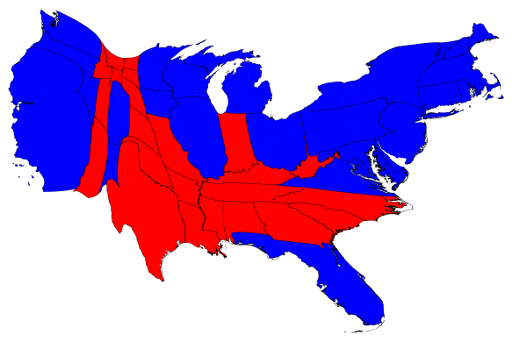
President Barack Obama won reelection with 332 Electoral College votes, more than 64 million actual votes, and 50.7% of the popular vote to his main opponent’s 47.5%. Those numbers and margins are higher than the last time a President was reelected, in 2004. In fact, more Americans voted for President Obama than for any other Presidential candidate except himself in 2008, and his popular-vote total might actually go up as large coastal states finish their counts.

But some people with OIP Derangement Syndrome can’t accept that reality.

In Maine, the Portland Press Herald reported, Republican party chair Charlie Webster alleged a particular sort of voter fraud:
“In some parts of rural Maine, there were dozens, dozens of black people who came in and voted on Election Day,” he said. “Everybody has a right to vote, but nobody in (these) towns knows anyone who’s black. . . .”

When [TV host] Carrigan pressed Webster on where it happened, Webster provided no specifics or proof of his claims, but said the party would investigate further.

When asked about the issue in an interview Wednesday with the Portland Press Herald, Webster again refused to provide specifics.
But Webster did inflate his figure to “hundreds” before apologizing under criticism:
“my comments were made without proof of wrongdoing and they had the unintended consequence of casting aspersions on an entire group of Americans.”
We must note that the Obama-Biden ticket won the state of Maine in both 2008 and 2012 by over 100,000 votes.

In Pennsylvania, the Philadelphia newspapers reported, Republican House Speaker Sam Smith complained, “I was told that 90 percent of the precincts in Philadelphia County turned out over 90 percent of voters. . . . It’s questionable.” The newspapers pointed out that Smith’s complaint was more than questionable; with Philadelphia showing a 60% turnout overall, Smith’s numbers were mathematically impossible. The Obama-Biden ticket won the state of Pennsylvania by over a quarter-million votes.

Before the election, Dean Chambers made a small name for himself by “unskewing” standard polls with a higher proportion of Republican voters. The polls in aggregate turned out to be right, and his website wrong. So after the election Chambers returned with a new website alleging voter fraud in four swing states, as Slate reported. All four of those states have Republican governors and legislative chambers that made a priority of voter fraud in this election year. Yet he suggests that nearly half a million fraudulent votes in those states swayed the election.

And his evidence? “Things like the 59 voting divisions of Philadelphia where Romney received zero votes.” As Slate noted, such local results are no surprise: 57 Philadelphia precincts (out of more than 1,600 in the city) gave McCain no votes in 2008. Furthermore, a zero vote count is the easiest type of fraud to expose: Chambers and his fellow sufferers simply have to find one person claiming to have voted for the Republican ticket in those precincts. The Philadelphia Inquirer went looking for such a person by starting with the very few people registered as Republican in those wards. And what did they find?
James Norris, 19, who lives down the street, is listed as a Republican in city data. But he said he’s a Democrat and voted for Obama because he thinks the president will help the middle class.

A few blocks away, Eric Sapp, a 42-year-old chef, looked skeptical when told that city data had him listed as a registered Republican. “I got to check on that,” said Sapp, who voted for Obama. . . .

Three of the 15th’s registered Republicans were listed as living in the same apartment, but the tenant there said he had never heard of them. The addresses of several others could not be found.
Will Chambers investigate the possibility of Republican Party registration fraud? I doubt it. OIP Derangement Syndrome doesn’t allow for that sort of rational thinking.

21 November 2012

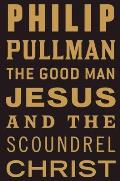
Pullman on “your appalling self-consciousness”

More from the Mother Jones interview with Philip Pullman:
The central moment in the account of Adam and Eve in the book of Genesis is when they sort of come to after they've eaten the fruit and they realize they’re naked and try and cover themselves with fig leaves. That seemed to me a perfect allegory of what had happened in the 20th century with regard to literary modernism.

Literary modernism kind of grew out of a sense that, “Oh my god! I’m telling a story! Oh, that can’t be the case, because I’m a clever person. I’m a literary person! What am I going to do to distinguish myself? I know! I’ll write Ulysses.” [Laughs.] Actually, I don’t think that was Joyce’s motive—but a lot of modernism does seem to come out of a fear of being thought an ordinary storyteller. So they tell it backwards and they tell it in the present tense and they cut loose the pages and shuffle them around—all that kind of stuff.

When I first started writing, I tried to do that sort of thing, but I realized that there was a limited value in that. And it also made it difficult to read, and I didn’t really want my books difficult to read. This is the value for me of writing books that children read. Children aren’t interested in the least about your appalling self-consciousness. They want to know what happens next. They force you to tell a story.
This isn’t the only Christian allusion that Pullman drops in this interview—though he also describes himself in this interview as an agnostic and is notorious in some self-conscious circles for portraying organized religion in a harsh light. Which shows you can take the vicar’s grandson out of the church, but you can’t take the church out of him.

Of course, Pullman has other levels of belief:
The state of mind which I put myself when I tell a story is one in which superstition flourishes very easily. And I welcome that because it helps me. A story, to me, has a particular sprite, like the angel of the spirit of that story—and it’s my job to attend to what it wants to do. When I tell the story of “Cinderella,” the sprite does not want me to make it into an allegory of the fall of communism. The sprite would be unhappy if I did that. I can’t put it any more clearly than that because it’s a strange area and I’m not very sure about it myself. But I’m perfectly happy about being superstitious and atheistic.
An almost supernatural way of divorcing his authorial consciousness from the act of storytelling.

20 November 2012

Baum Quotations, Real and Imagined

Jared Davis of the Royal Blog of Oz recently asked about a quotation that many websites and a few books attribute to L. Frank Baum:
Whenever I feel blue, I start breathing again.
None of those sites and books identifies any specific book or article as a source. The idiom “feel blue” was current in the late 1800s, so Baum could have said this. But that’s not good enough. People making a historical claim have the responsibility to provide evidence for it, not shift the burden of proof to skeptics to disprove the claim.

In this case, the quotation doesn’t ring bells with any of us older Oz fans who imbibed our knowledge in past decades, and since close to 99% of Baum’s surviving writing was published before 1920, it would be unusual for a quotable line to be so unfamiliar. I checked Google Books and saw that the “feel blue” saying appeared in books through about 2005 without attribution, and with Baum’s name attached only since 2009.

The internet is a marvelous hothouse for false quotations. As soon as a quote appears on one website, it gets picked up and spread around on others. And soon someone doing a search for a quotation’s source will see what looks like a critical mass of confirmation. Even this page could look like further evidence.

I checked out Goodreads’ page of Baum quotations, and it’s a big mix. There are many quotations from Baum’s books. But there are also many quotations from the 1939 MGM movie misattributed to Baum:
  • “Toto, I have a feeling we’re not in Kansas anymore.”
  • “Some people without brains do an awful lot of talking, don’t you think?”
  • “Nobody gets in to see the Wizard. Not nobody.”
  • “It’s so kind of you to want to visit me in my loneliness.”
  • “Going so soon? I wouldn’t hear of it. Why my little party’s just beginning.”
  • “My world, my world... How can such a good little girl like you destroy all of my beautiful wickedness?” [Actually, that’s even a misquote of the movie line: “Oh, what a world! What a world! Who would have thought a good little girl like you could destroy my beautiful wickedness?”]
  • “Pay no attention to the man behind the curtain!”
  • “If I ever go looking for my heart’s desire again, I won’t look any further than my own back yard. Because if it isn’t there, I never really lost it to begin with.” [Which makes no sense at all.]
  • “I’ll miss you most of all, Scarecrow.”
  • “Now I know I’ve got a heart because it’s breaking.”
Lines original to the screenplay should probably be credited to Noel Langley, Florence Ryerson, and Edgar Allan Woolf, the screenwriters. Even that attribution might be questionable, however, since several other writers also worked on the movie, the last being John Lee Mahin.

In fact, the one person losing the most credit to Baum at Goodreads is probably E. Y. “Yip” Harburg, who wrote the movie’s lyrics and the Wizard’s speech as he presents the gifts to Dorothy’s companions. Harburg deserves credit for:
  • “If I [only] had a heart…”
  • “Lions and tigers, and bears, oh my!”
  • “Courage! What makes the flag on the mast to wave? What makes the elephant charge his tusk in the misty mist, or the dusky dusk? What makes the muskrat guard his musk? Courage! What makes the sphinx the seventh wonder? Courage! What makes the dawn come up like thunder? Courage! What makes the Hottentot so hot? What puts the ‘ape’ in apricot?”
  • “Hearts will never be practical until they can be made unbreakable.”
  • “And remember, my sentimental friend, that a heart is not judged by how much you love, but by how much you are loved by others.”
The screenwriters adapted some of Baum’s dialogue closely. But even on Goodreads people remember the movie version:
“Oh – You’re a very bad man!"

“Oh, no, my dear. I’m a very good man. I’m just a very bad Wizard.”
Baum’s original exchange was:
“I think you are a very bad man,” said Dorothy.

“Oh, no, my dear; I’m really a very good man, but I’m a very bad Wizard, I must admit.”
Then there are oddities in the list like this one, which has a grammatical error of agreement in the first sentence:
“People would rather live in homes regardless of its grayness. There is no place like home.”
Baum actually had Dorothy say:
“No matter how dreary and gray our homes are, we people of flesh and blood would rather live there than in any other country, be it ever so beautiful. There is no place like home.”
Of course, the final line predates The Wonderful Wizard of Oz by decades. It comes from John Howard Payne’s song “Home, Sweet Home!” (1823).

Here’s another commonly seen quotation:
“Never give up. No one knows what’s going to happen next.”
In The Patchwork Girl of Oz Dorothy really bucks up the moody young protagonist this way:
“Never give up, Ojo,” advised Dorothy. “No one ever knows what’s going to happen next.”
Finally, there’s a platitude that I can easily imagine someone today writing and then attaching to Baum to make the sentiment seem more authoritative:
“Stunt, dwarf, or destroy the imagination of a child, and you have taken away its chances of success in life. Imagination transforms the commonplace into the great and creates the new out of the old.”
But Baum actually said that in a 1909 interview with a magazine called The Advance.

19 November 2012

The Takedown

At Publishers Weekly’s PWxyz blog, Peter Brantley highlighted some new Republican thinking about copyright law that was quickly squelched by old Republican thinking:

On Friday, 16 November, the conservative Republican Study Committee (RSC) released an amazingly liberal document proposing deep and substantive reforms in U.S. copyright law. Within 24 hours, on Saturday, 17 November, the report had been pulled from the House website and an email apology for its “inadequate” vetting had been flung out on the net. . . .

The report details four areas of potential reform: 1). Statutory Damages. “Copyright awards were meant to make the copyright holder whole – they were not supposed to be punitive. Reforming this process is an important element of federal tort reform, which unlike other forms of tort reform is clearly within the federal prerogative.”

2). Expansion of Fair Use. “Right now, it’s somewhat arbitrary as to what is legally fair use based upon judicially created categories.”

3). Punish false copyright claims. “Because there is minimal or nearly non-existent punishment for bogus copyright claims today, false takedown requests are common and have a chilling effect upon legitimate speech.”

And, 4). Limit copyright terms and create disincentives for renewal. The report elucidates one possible path, with an initial 12 year copyright award period and renewable elective terms that are fee-based, with a maximum cliff of 46 years protection. This last proposal is actually currently infeasible in an international context, which is based on life of the author plus 50 years (life+50) for most non-corporate works.
I suspect the report was more “libertarian” than “liberal,” though there’s significant overlap between those terms. It proposed to dial back government-backed legal advantages for copyright owners. (For some radical libertarians, governments shouldn’t be granting patents and copyrights at all.)

The American right is energized by four strains of conservatism: libertarian, social/theocratic, pro-business, and general pro-establishment crankiness. (To put faces on those impulses, consider Ron Paul, Rick Santorum, Mitt Romney, and Newt Gingrich, respectively, at the end of the 2012 Republican primaries.) Sometimes those strains are at odds with each other. This report reflected libertarian thinking. After business lobbies contacted party leaders, the stronger pro-business wing pulled it back.

As for the proposals, I think we’d all benefit from clearer definitions of fair use. I’m not sure point 1 is valid—sometimes damages are supposed to be punitive—but agree with point 3 that false claims should also produce punishments. Point 4 would reduce copyright terms to below what American creators have enjoyed for a century and, as Brantley points out, would go against international agreements. Copyright terms have become irrationally long, but the US can’t decide that point alone.

18 November 2012

A Sidekick in the Pants

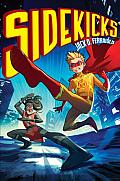
Sidekicks has a mighty “tween”-looking cover for a book that starts out with a boner.

In fact, teen-sidekick-getting-an-erection was the starting-point for novelist Jack D. Ferraiolo, as he explained on his blog:
I was a full-fledged Batman freak... and being that this was the early eighties (and the Batman comics from the 70s were still pretty available), the DC writers/artists were continuing the process of aging Robin up. I remember…looking at a comic of a late teen/early 20’s Robin and thinking, “Man, he should really cover up.” Here he is fighting hardened criminals – thugs, thieves, murderers – and he's wearing the tiniest pair of green jockey shorts imaginable. And no one mentions it?  I mean, not one street tough has something to say about Robin’s itty-bitty bikini bottoms? Especially with all those high kicks he was throwing around?
Actually, Robin’s friends had been calling him “Shortpants” for years by then. Marv Wolfman and George Pérez acknowledged the oddity of an eighteen-year-old in trunks as they discussed the early New Teen Titans. Mention of Dick Grayson’s bare legs was forbidden only for villains and, of course, Bruce Wayne.

Then came Frank Miller’s The Dark Knight Returns and more emphasis on realism/grittiness in superhero comics. In 2007, even DC addressed the erection question in Nightwing Annual, #2, which shows a late-teens Robin wishing for a longer cape and a minute to compose himself after getting too close to Batgirl.

Ferraiolo’s prose novel examines the plight of the adolescent sidekick through the voice of Bright Boy, ward of Phantom Justice. Their relationship is obviously modeled on that of Batman and Robin. As a dark-caped crimefighter, Phantom Justice says, “Good soldier”; he talks about “embracing the night” but can’t connect with anyone emotionally. There’s even an Alfred figure, a butler and voice of common sense.

However, in this world some people have been born with extra strength, speed, and/or intelligence. Phantom Justice and Bright Boy aren’t “badass normal” like Bruce Wayne and Dick Grayson. They’re “plus-plus.” And while their world has mad scientists with amazing inventions, there’s no Wonder Woman, Green Lantern, or Spectre to keep them from the top of the pecking order.

Reviewers obviously new to the superhero genre seem struck by the drastic reversals built into the plot, but those are common in adventure comics. What seems fresh to me is the realistic dialogue between the two adolescents feeling their way into a complicated love affair. On the downside, there are pages and pages of exposition.

I thought the biggest flaw in Sidekicks is that it ends with no “price of fantasy,” as Ellen Howard has termed it. At the start of the book, protagonist Scott feels like a nobody in high school and an embarrassment in the media—those are the costs of being a superpowered hero. (In addition, Scott’s parents died in an accident when he was little, but—unlike the ache that drives the Harry Potter books, even though Harry never knew his parents—we don’t feel that loss.)

At the end of Sidekicks [and that means SPOILERS AHEAD], Scott has solved the problems that bothered him at the start. He’s got a girlfriend, and pals, and cooler clothes, and public adultation, and freakin’ superpowers. For a while it looks like he has to pay a big price—he thinks two of the people he loves have died. But everyone turns out okay in various futuristic ways. The only person he really loses is someone whom he could never warm up to. Scott even manages to come out on top of the Oedipal conflict. It’s total wish-fulfillment with very little cost. [End of SPOILERS] But, as with the plot reversals, that probably won’t look like a flaw to teen readers not yet jaded about this genre.

Which brings me back to that cover. Amulet designer Chad Beckerman has shown how it went through a lot of changes, starting with a more realistic close-up of the main character (wearing braces, though I don’t think they’re mentioned in the book) before ultimately ending up with the art above. One intermediate version appears to the left. Twice, Beckerman writes, the design sketches had “too much crotch.” Yet “too much crotch” is exactly where the story starts.

Ferraiolo writes that he’s heard some criticism (from adults) and lost some library speaking gigs because people thought the novel was inappropriate for younger readers. I think the story’s quite appropriate for young adolescents. But the final cover’s cartoony art, and our culture’s assumption that all superhero stories are appropriate for kids, may suggest to some adults that this is a book for the middle grades.

16 November 2012

When OIP Derangement Syndrome Turns Deadly

When Talking Points Memo rounded up “The 6 Most Bizarre Freakouts Over Obama’s Re-Election,” the site excluded “incidents where mental illness may have been a factor.” But there is an unfortunate overlap between OIP Derangement Syndrome and violent crime.

Back in 2009, a 22-year-old named Richard Poplawski shot three police officers in Pittsburgh. Poplawski had told at least two friends that he believed President Barack Obama was going to take away his rights. His paranoia also focused on Jews. He has been sentenced to death in Pennsylvania.

Shortly afterward, a 28-year-old named Joshua Cartwright killed two sheriffs’ deputies in Florida before being shot to death. His wife said he as “severely disturbed” by President Obama’s election and believed the federal government was oppressing him.

In November 2011, a 21-year-old man named Oscar Ramiro Ortega-Hernandez traveled from Idaho Falls to Washington and fired nine rifle shots at the White House. One round hit a window of the first family’s living quarters, though that was probably a lucky shot and they weren’t home. Hernandez had told people that Obama was the “antichrist” and the “devil.”

In August 2012, Georgia authorities indicted four U.S. Army soldiers who had talked about assassinating President Obama, as well as taking over a local fort, bombing sites, and poisoning apple crops. Such planning might sound ludicrous, but the four had murdered a former comrade and his girlfriend who knew about their discussions.

In September, the Daily Mail reported that 57-year-old Albert Peterson killed his wife, two young sons, and himself in a severe depression that became focused onto Obama. American newspapers haven’t run that aspect of the murder-suicide, which is based on statements of an anonymous friend of the family. The Mail quoted a police department spokesperson saying, “We are aware that the father had strong political opinions.”

This month, a 28-year-old woman named Holly Solomon was so upset about President Obama’s reelection that she chased down her husband, who hadn’t voted, with her Jeep. He was severely injured. She was arrested.

And a 64-year-old Florida man named Henry Hamilton committed suicide after the election, writing an obscenity about Obama on the wall as he did. Hamilton was taking medication for “anxiety and schizophrenia,” according to the Miami Herald.

Some of those people had already been under psychiatric care, and others were at the age when serious mental illnesses can emerge. Still, it’s striking how their delusions came to echo the messages and implications of America’s right-wing media, quick to blame President Obama for all problems or believe the worst about him.

15 November 2012

Sendak “born to Holocaust survivors”?

Gail Gauthier clued me in to this interview with Maurice Sendak at The Believer. It was no surprise that the conversation touched on the Nazi Holocaust. Sendak stated:
Nearly all my relatives died in the concentration camps, except my parents.
“Nearly all”! Well, a few seconds later he said:
The only one who talked about it was my grandmother, who was a very fierce woman. The only grandparent I had.
Okay, nearly all his relatives except his parents and one grandparent.
She was the only one who came over. Who was brought over by her idiot daughters, my aunts. And idiot uncles, her sons.
Okay, except his parents, one grandparent, and an unknown but plural number of aunts and uncles.

And at least one of the uncles or aunts had at least one child:
We [Sendak and his older brother and sister] had a cousin. We were not supposed to like her, because she was a communist. She was very plain. I adored her, and me and my sister would steal off and go to her house. She sat and talked to me and told me that I knew how to draw and that I could be an artist, or anything, and I thought if she was in the world, then good was in the world.
And about that grandmother:
Her husband died when he was forty, which drove my mother crazy. She blamed his death on my grandmother, which is why my grandmother sent her to America—shut up, get outta here. So she came to America. A sixteen-year-old girl, alone.
Sendak’s mother, Sadie Schindler, was born in 1895, and if she came to America at sixteen that was even before World War I. Which means her father had died decades before the Nazi concentration camps. So Nana Schindler was indeed “The only grandparent” Sendak knew, but the Holocaust wasn’t the reason Sendak didn’t know his maternal grandfather.

Sendak did tell a story about his father learning that all his family had been killed in Europe, the news arriving on on the day of his bar mitzvah. That was in 1941, and Philip Sendak’s home town of Zambrow, Poland, was wiped out by the Nazis starting in July 1941, according to different sources.

So Sendak did lose relatives he never had the chance to meet in the Holocaust—but not “Nearly all” his family except his parents. The Holocaust was undoubtedly part of his psyche and his artistic inspiration, but its actual effect on his relatives became exaggerated.

In its obituary for Sendak, The Jewish Press described him as “born to Holocaust survivors” even as it reported his age. He was born in 1928 in Brooklyn to a couple who hadn’t survived the Holocaust because it hadn’t happened yet and they were thousands of miles away when it did. But that’s apparently not how Sendak saw himself.

14 November 2012

Is This the Real Romney Returning?

As we all know now, Mitt Romney was caught on tape back in May making false and snobbish comments about “47%” of the country. At first Romney endorsed those comments. Then he repudiated them, as he’s repudiated so many other positions he’s taken. So had he really believed them, or was he just telling his audience of rich donors what he thought they wanted to hear?

Today he echoed those comments in another conversation with rich right-wing donors that he apparently thought would never become public, as the New York Times reported. The Los Angeles Times also had access.

Romney claimed that President Barack Obama won because his policies amounted to “gifts” to “the African-American community, the Hispanic community and young people.” Apparently, Romney’s promises of lower taxes for the wealthy, increased defense spending, regulatory rollbacks, and the like wouldn’t have been “gifts” to any of his supporters.

Here’s a taste of the conversation:

“You can imagine for somebody making $25,000 or $30,000 or $35,000 a year, being told you’re now going to get free health care, particularly if you don’t have it, getting free health care worth, what, $10,000 per family, in perpetuity — I mean, this is huge,” Mr. Romney said. “Likewise with Hispanic voters, free health care was a big plus. But in addition with regards to Hispanic voters, the amnesty for children of illegals, the so-called Dream Act kids, was a huge plus for that voting group.”
What a heartless and mendacious remark. As you see, Romney went back to showing disdain for the working poor. He once again zigzagged on his own health-insurance policy in Massachusetts and lied about the federal law.

I’m particularly irked by the comment about “the children of illegals.” Some of those children are American citizens. There’s no “amnesty” involved there; they haven’t done anything they need amnesty for.

People to whom the Dream Act would apply are, in Romney’s own word, “illegals” themselves. But they came into the US as children, like Romney’s father. In June he referred to them as “young people who come here through no fault of their own.” Yet for the rich conservatives listening in on his phone call, Romney pulled out the term “amnesty.”

What a vile man Romney is. We’re very fortunate to have avoided granting him any form of national authority.

13 November 2012

Sky Island Gets Real

From artist Willie Real, here’s another interpretation of the protagonists of L. Frank Baum’s Sky Island.

That’s Trot, Button-Bright, and Cap’n Bill.

Real also shared a picture of this Button-Bright inside the Boolooroo’s treasure chamber, with the blue wolf behind him. Thank goodness he’s carrying a pillow. You can read that chapter of Sky Island here.

12 November 2012

Philip Pullman’s School Story

From the Mother Jones interview:

The range of individuality [in] children is infinite, but every class of children seemed to have the same groups. And there was a chief girl and a chief boy—a girl that all the other girls of that age looked up to and imitated and a boy that all the boys looked up to and imitated. I realized that if I got them on my side and exclusively taught them for a couple of weeks, maybe for the first full term, then I wouldn't have any trouble. Teachers often make the mistake of thinking they’re the boss of the class; they’re not. The boss of the class is sitting down there somewhere.
Pullman taught school at the beginning of his career. He seems to have taken a practical approach.