Two Takes on Charity and Sylvia
For example, after publishing Never Caught: The Washingtons’ Relentless Pursuit of Their Runaway Slave, Ona Judge in 2017, Erica Armstrong Dunbar worked with Kathleen Van Cleve to produce a Never Caught, the Story of Ona Judge: George and Martha Washington’s Courageous Slave Who Dared to Run Away, a “Young Readers Edition” published in 2019.
Marcus Rediker initiated collaborations with David Lester and Paul Buhle on graphic novels adapted from his books: Prophet Against Slavery: Benjamin Lay, a Graphic Novel; Under the Banner of King Death: Pirates of the Atlantic, A Graphic Novel; and Revolution by Fire: New York’s Afro-Irish Uprising of 1741, a Graphic Novel.
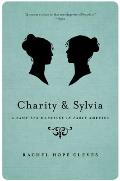
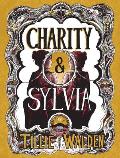
Earlier this month I saw an announcement of Tillie Walden’s new graphic novel Charity and Sylvia, published by Drawn & Quarterly, about a couple in Vermont in the early 1800s. I immediately connected that to Rachel Hope Cleves’s study Charity and Sylvia: A Same-Sex Marriage in Early America, published in 2014 by Oxford University Press.
I wondered if Walden had adapted Cleves’s work, or fictionalized it with her blessing. When I shared news of the graphic novel with the Boston Comics Roundtable, I added a mention of Cleves’s work.
Last night Cleves posted an open letter to readers that says in part:
I've tried to be happy that Walden's book is making their story more widely known, even if she chose to take my title and my cover design as well as my narrative and my research with only a single sentence of acknowledgement at the end of her book in her notes section. Walden's illustrations and storytelling are wonderful, as I told her when she reached out to me during the writing process. It would take nothing away from her hard work to be honest about how it is built on my hard work. But in Walden's publicity tour, she has repeatedly made the claim to have based her book on her extensive research in the archive without acknowledging that her book is, in fact, based on my book. . . .The process of creating a graphic novel is akin to dramatizing a narrative for stage or screen. The script turns narration and analysis into scenes with dialogue. The art builds on descriptions or imagination. Even the most nonfictional narrative comic is a fictionalizing adaptation of its sources.
I don't doubt that Walden spent time looking at letters at the Henry Sheldon Museum, but the story that Walden tells is not to be found there. It is a story that I pieced together from years of visits to at least twenty different archives and locations across the United States, not only in Vermont but in Massachusetts, New York, Illinois, and Washington State, as well. . . . Many of the details of that story which appeared in my book, and re-appear in Walden's, do not come from the Henry Sheldon Museum, where she claims to have done her research. They come from the countless additional archives I visited.
With fiction, we readily recognize how a graphic novel or dramatization is a derived work. Unless the original story has entered the public domain, the new publication requires contracting for the right to adapt the original, crediting and compensating its author. After all, the story and characters wouldn’t exist without the first author’s creativity.
With nonfiction, the law is less clear. No one has a copyright claim on historical facts. No one can call dibs on the exclusive right to line up events in chronological order. As legal experts often say, copyright doesn’t protect ideas; it protects the expression of those ideas.
In her open letter, Cleves writes: “This is not just a question of facts but of story: the story of how Charity and Sylvia built a life together…” But was that “story” created by the subjects living their lives or by the historian reconstructing those lives in a meaningful form? Is a “story” a copyrightable expression of ideas that survives even when it’s expressed in a different form?
There’s no doubt that Cleves’s research unearthed facts about Charity Bryant and Sylvia Drake, produced enough detail to build a compelling story, and smoothed the path for future researchers. Unlike the tale of Ona Judge or the 1741 uprising in New York, there are no other books to draw from. So what claim should Cleve have on that subject? Our copyright law protects creative work, but should it also require compensation for hard work?
TOMORROW: A personal perspective.




No comments:
Post a Comment