31 August 2012

Acting Out OIP Derangement Syndrome

I had another topic in mind, but last night actor-director Clint Eastwood made a surprise appearance at the Republican National Convention. And his performance provided an embodiment—or perhaps a caricature—of OIP Derangement Syndrome. Eastwood offered us the spectacle of an old angry white man feeling glee at being able to speak contemptuously to a wholly imaginary version of President Barack Obama.

Addressing an empty chair, Eastwood delivered remarks that almost every observer called “rambling,” with a steady emotional line but no internal logic and significant omissions and misstatements. Here’s the transcript, courtesy of National Public Radio.
Thank you very much. Thank you. Thank you very much. Thank you.

Save a little for Mitt.

I know what you're thinking. You're thinking, what's a movie tradesman doing out here? You know they are all left-wingers out there, left of Lenin. At least that's what people think. But that's not really the case. There's a lot of conservative people, a lot of moderate people, Republicans, Democrats, in Hollywood. It's just that the conservative people by the nature of the word itself play it a little more close to the vest. They don't go around hot-dogging it. So, uh ... But they're there, believe me, they're there. I just think, in fact, some of them around town, I saw Jon Voigt, a lot of people around here in town.

John's here, an Academy Award winner. A terrific guy. These people are all like-minded, like all of us.

So I — so I've got Mr. Obama sitting here. And he's — I just was going to ask him a couple of questions. But, you know, about, I remember three-and-a-half years ago, when Mr. Obama won the election. And though I wasn't a big supporter, I was watching that night when he was having that thing and they were talking about hope and change and they were talking about, yes we can, and it was dark outdoors, and it was nice, and people were lighting candles. And they were saying, you know, I just thought, this is great. Everybody's crying. Oprah was crying.

I was even crying. And then finally — I haven't cried that hard since I found out that there's 23 million unemployed people in this country.

Now that is something to cry for because that is a disgrace, a national disgrace, and we haven't done enough, obviously — this administration hasn't done enough to cure that. Whatever interest they have is not strong enough, and I think possibly now it may be time for somebody else to come along and solve the problem.
OIP Derangement Syndrome prevented Eastwood or his audience from acknowledging that our high unemployment is the result of the Bush-Cheney recession, that most economists agree that President Obama’s stimulus policy kept the job losses from being worse, and that Republicans in Congress have stymied further measures to fuel the economy.
So, so, Mr. President, how do you, how do you handle, how do you handle promises that you've made when you were running for election and how do you handle, how do you handle it?

I mean, what do you say to people? Do you just — you know — I know — people were wondering. You don't? You don't handle it.

Well, I know even some of the people in your own party were very disappointed when you didn't close Gitmo. And I thought, well, closing Gitmo — why close that? We spent so much money on it. But, I thought maybe as an excuse.

Oh, What do you mean shut up?

OK, I thought it was just because somebody had the stupid idea of trying terrorists in downtown New York City. Maybe that was it.

I've got to, I've got to hand it to you. I've got to give credit where credit is due. You did finally overrule that finally. And that's so, now we're moving onward. I know, in the, you were against the war in Iraq and that's OK. But you thought the war in Afghanistan was OK.

You know, I mean — you thought that was something worth doing. We didn't check with the Russians to see how they did there for 10 years.

But we did it, and it was, it's something to be thought about and I think that when we get to maybe — I think you've mentioned something about having a target date for bringing everybody home and you give that target date, and I think Mr. Romney asked the only sensible question. He says, "Why are you giving the date out now? Why don't you just bring them home tomorrow morning?"
Is Eastwood actually against fighting the war in Afghanistan? If so, he was going against his candidate and most of the Republicans in that hall. Or was he just grabbing any excuse to complain about President Obama?
And I thought — I thought, yeah — there's, I'm not going to shut up. It's my turn.

So anyway, we're going to have, we're going to have to have a little chat about that. And then, I just wondered, all these promises and then I wondered about, you know, when the, What? What do you want me to tell Romney? I can't tell him to do that. That. He can't do that to himself.

You're crazy. You're absolutely crazy. You're getting as bad as Biden.

Of course we all know Biden is the intellect of the Democratic party.

Just kind of a grin with a body behind it.

But I just think that there's much to be done and I think that Mr. Romney and Mr. Ryan are two guys that can come along. See, I never thought it was a good idea for attorneys to be president anyway, because ... Yeah.
Mitt Romney has a degree from the Harvard Law School.
I think attorneys are so busy. You know, they're always taught to argue everything, and always weigh everything and weigh both sides and they're always, you know, they're always devil's advocating this and bifurcating this and bifurcating that. You know all that stuff. But, I think it is maybe time. What do you think for maybe a businessman? How about that?

A stellar businessman. Quote, unquote, a stellar businessman. And I think it's that time. And I think if you just kind of stepped aside and Mr. Romney can kind of take over.

You could still use the plane. Though maybe a smaller one. Not that big gas guzzler when you're going around to colleges and talking about student loans and stuff like that.

You're an ecological man. Why would you want to drive that truck around?

OK, well, anyway. All right, I'm sorry. I can't do that to myself either.

But I'd just like to say something, ladies and gentlemen. Something that I think is very important. It is that, you, we, we own this country.

Thank you. Thank you.

Yes, we own it. And it's not you owning it and not politicians owning it. Politicians are employees of ours.

And, so, they're just going to come around and beg for votes every few years. It's the same old deal. But I just think that it's important that you realize and that you're the best in the world.

And whether you're Democrat or whether you're a Republican or whether you're Libertarian or whatever, you're the best. And we should not ever forget that. And when somebody does not do the job, we got to let 'em go.

Let 'em go.

OK, just remember that. And I'm speaking out for everybody out there. It doesn't hurt, we don't have to be ...

I do not say that word anymore.

Well, maybe one last time.

We don't have to be — what I'm saying, we don't have to be metal masochists and vote for somebody that we don't really even want in office just because they seem to be nice guys or maybe not so nice guys if you look at some of the recent ads going out there. I don't know.

But OK.

You want to make my day, huh?

All right.

Go ahead...

(AUDIENCE: Make my day!)

Thank you. Thank you very much.

29 August 2012

Mogo Doesn’t Plagiarize

A colleague in the Boston Comics Roundtable told a story of someone seeing his Green Lantern T-shirt and asking, “Hal, John, or Kyle?” To which he was pleased to answer, “Guy.”

Evidently that’s how Green Lantern fans talk. A few years ago, I wouldn’t have been able to make head or tails of the conversation. But now I could answer: “Mogo.”

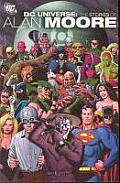
Mogo is the planet-sized Green Lantern who debuted in the six-page story “Mogo Doesn’t Socialize,” published in Green Lantern, #188 (1985). That back-up feature, written by Alan Moore and drawn by Dave Gibbons, is collected in DC Universe: The Stories of Alan Moore.

As an Alan Moore character, however, Mogo almost perforce has a longer literary pedigree. Duy Tano just noted this panel from “The Bounty Hunters,” a story by Moore and artist John Higgins published in the British comics magazine 2000 AD in 1982.

One character says, “I read this story once where these guys are looking for an alien, not realising that the alien is really the planet they’re standing on…” That panel appears in The Complete Alan Moore Future Shocks. It shows Moore was already mulling over the idea that became Mogo.

By having his character allude to a “story,” I think Moore was hinting that he himself had read such a tale. Or two or more. Back in 1963, as Bob from Cartoonacy pointed out on Duy Tano’s site, a Green Lantern story featured a sentient planet: “The Strange World Named Green Lantern,” written by John Broome and drawn by Gil Kane. Marvel Comics had its own living planet, Ego, created by Jack Kirby and Stan Lee in 1966.

But Moore’s clearest comics antecedent is “Dead Planet,” published in Tales to Astonish, #27, with a cover date of Jan 1962. Scripted by Lee and drawn by Steve Ditko, this story is only five pages long. Nathan Mahney synopsizes it like so:
The Komok race travels from planet to planet, as each one of its warriors conquers a planet single-handedly. But if any one Komok fails, all of them will be forced to return home in disgrace. Mopox is dispatched to conquer his planet, but he can find no sign of life on its barren surface, despite what his instruments tell him. He dies of loneliness, not knowing that the life on this planet takes the form of sentient rocks.
See more panels on Bully’s Tumblr.

“Mogo Doesn’t Socialize” has the same plot as “Dead Planet”: a character bent on conquest comes to a planet and searches in vain for a foe to fight because he can’t recognize what he’s looking for. Like the Green Lantern in 1963, he eventually discovers he’s up against an entire planet.
Of course, Moore does the story better than his predecessors. He ties the episode into the larger DC mythos. He uses the Green Lantern symbol as part of the big reveal. His prose is lively.

Still, this is one of many examples of how Moore builds many of his best stories on preceding writers’ creations—combining them, building on them, twisting them in new ways. Without, however, rendering the sources unidentifiable.

28 August 2012

Representative

I’m at the local library, and nearby is this local poster promoting literacy.

The lady smiling in the photo is my state representative, Kay Khan.

I didn’t realize her choice of literature before.

But now I’m even happier I voted for her.

27 August 2012

What Happens to Hawkins?

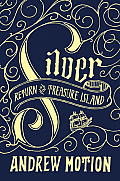
Another example of British publishing’s current infatuation with latter-day sequels is Andrew Motion’s new Silver: Return to Treasure Island. Liesl Schillinger’s review in the New York Times Book Review explains the set-up:
In “Silver,” which is set some 35 years after “Treasure Island,” Motion introduces us to the son of Jim Hawkins, the original boy adventurer. Decades after making his adolescent splash, Hawkins père has washed up in a gloomy, rum-soaked middle age, running an inn on the Thames.

Jim Jr., serving as narrator, explains that his father had spent a decade in London, squandering his pirate booty on high living, before settling down to innkeeping and marriage with a woman who died giving birth to their child. Since then, the widower’s only joy has lain in endless retellings of his swashbuckling glory days.
No, no, no, no, no! Jim Hawkins is not the type to lead a dissipated life. He’s seen too much. And, frankly, he’s too greedy.

No, Jim Hawkins uses his wealth to buy a small but solid estate in the north of England. After his mother passes away, he invests in some of the new ventures with steam engines, canals, and the like, thus growing his fortune. In time Squire Hawkins develops a reputation for being a hard bargainer, a demanding boss, and a strict landlord. A reputation that’s a bit at odds with how he chose to hire a washed-up one-legged cook who hobbled onto his estate one year.

26 August 2012

What Is John Blake Supposed to Be?

Bleeding Cool’s Between the Pages vlog has offered a friendly video discussion between editor Grace Randolph and superhero-fashion blogger Alan Kistler on the history of Robins, with particular attention to the latest iterations in comics (Damian Wayne), videogames (Tim Drake in a hoodie), and movies (Det. John Blake).

The thorough discussion proceeds along standard lines, with a lot of familiar imagery. It’s interesting to see how comics fans’ perception of changes can differ based on when they encounter them. For example, Kistler points out a couple of times that the dark, gritty original Batman lasted less than a year in the comics in 1939-40. However, the conversation leaves the impression that Batman went through an extended period of grimness after Jason Todd’s death at the end of 1988.

In fact, it was only a few months before Tim Drake came on the scene as a new Robin—DC had already put out a call for that character. I suspect that Kistler was then reading monthly installments as a young adolescent, and that period felt much longer.

It’s also notable what assumptions Randolph’s presentation makes about how fans view Robins:
Joseph Gordon Levitt is Robin and/or Nightwing in The Dark Knight Rises 2012. But is his John Blake supposed to be Dick Grayson, Jason Todd, or Tim Drake? . . . And do you think Joseph Gordon Levitt is meant to become the next Batman, Robin, or Nightwing?
John Blake exists in a universe in which [***SPOILERS***] French arch-detective Henri Ducard and ancient Mideastern assassin Ra’s al Ghul are the same person, in which Lucius Fox knows his employer’s biggest secret, and in which—the biggest change of all—Bruce Wayne is willing to retire from being the Caped Crusader.

There’s no reason that unfamiliar universe has to contain a Dick Grayson, Tim Drake, or any other character from other tellings of the Batman mythos. Blake is a new character, displaying the narrative essence of the Robin character and a few similarities with previous incarnations, but entirely independent.

Will Blake become Batman or Nightwing (the latter having no precedent in that universe)? I don’t think it matters. A big theme of Christopher Nolan’s trilogy is the value of the Batman (or Harvey Dent) as a symbol of bravery and hope for Gotham City. Blake’s [***MORE SPOILERS, but nothing that’s not in the video***] departure from the police force and entrance into the cave at the end of The Dark Knight Rises promise that he’ll do something with those resources—and implicitly that he might inspire someone else in turn. But exactly what? We’ll never know.

ADDENDUM: Additional commentary from Caleb at Every Day Is Like Wednesday.

24 August 2012

Niall Ferguson’s OIP Derangement Syndrome

It’s no longer a surprise when a minor elected official from Texas goes on local television and spews conspiracy theories about President Barack Obama, as Tom Head did this month in Lubbock. By now we expect some of those people to suffer from OIP Derangement Syndrome.

But it’s a surprise when a prominent historian and public intellectual like Niall Ferguson publishes an essay so full of one-sided, incomplete, illogical, and simply wrong statements that it shows he’s incapable of assessing President Obama fairly.

As numerous refutations by other writers have pointed out, Ferguson’s Newsweek cover story, “Why Barack Obama Needs to Go,” does the following:
  • blame Obama because private employment numbers are worse than they were in January 2008, a full year before he took office—as if the Bush-Cheney recession hadn’t started in the meantime.
  • complain that the Obama administration hasn’t addressed the national infrastructure as promised without acknowledging that such projects were in the 2009 stimulus bill and other proposals since bottled up by Congress.
  • complain that that stimulus spending sped up the economy only briefly (foolishly pointing to unrelated numbers, showing the government’s long-planned census hiring), but also complain that coming cuts in spending would permanently slow the economy, and complain that the deficit is too large. 
  • criticize the costs of Obama’s health-insurance reform package without acknowledging the savings—and trying to justify this by citing one sentence on costs from a Congressional Budget Office report on costs while ignoring the very next sentence on savings.
  • blame Obama for both enlarging the deficit and for signing off on a deal to shrink the deficit (while praising Rep. Paul Ryan, who did the same things).
  • criticize Obama for not adopting the Bowles-Simpson Commission’s budget structure after Ryan, a member of that commission, had disowned it and brought the Republican House caucus along with him.
  • misstate that “half of us [are] paying the taxes” as if the federal income tax is the only tax Americans pay.
  • credit George W. Bush’s 2003 invasion of Iraq for the “Arab Spring” uprisings of late 2010 while denying Obama’s policies and initiative to intervene in Libya.
  • blame the President for China’s continuing economic growth, as if the largest country in the world was under American control and should remain poor.
  • quote economic measurements no one else can find.
Ferguson started his essay, “I was a good loser four years ago.” He was, after all, a supporter and advisor of John McCain. But he‘s a good loser no longer. Now he’s given himself over to OIP Derangement Syndrome.

23 August 2012

Redoing Mickey’s Monkey?

The legend of Maurice Sendak’s In the Night Kitchen is that “librarians across the country” painted a diaper or underwear over the hero Mickey’s genitals. This month at School Library Journal Kathleen T. Horning pointed out that the great majority of librarians supported full access to the book as Sendak had created it, as they supported him for most of his career.

Horning found three sets of evidence for authorities painting in the book:

  • a letter to School Library Journal from one Louisiana librarian in 1971, which prompted a semi-public response from Sendak’s editor, Ursula Nordstrom.
  • a school system in Missouri doctoring forty books before using Night Kitchen in a classroom.
  • Sendak’s own statement in 1991 that “I have a number of [altered] copies smuggled out to me by embarrassed librarians.”
However, in that same 1991 speech Sendak declared:
It’s been brought to my attention by a number of people that Mickey, in the lithograph I prepared for this American Booksellers Assn. convention, is still the 1970 little boy he always was—but that, oddly, his privates have grown way out of proportion. Now, this is true—I was unaware of that detail—and I’d like to think I inadvertently touched on some significant unconscious point—and not merely that I’m guilty of bad drawing. Either explanation might be correct, but of course I prefer the former.

What could be more reasonable under the circumstances? It makes a kind of comical sense; like Pinocchio’s nose displaced downwards (in Freud, it usually goes the other way), Mickey’s penis grows in response to the lie that is censorship, the lie that says children must be protected from such a sight.
Actually, all those explanations and symbolic interpretations are based on a faulty premise. The image of Mickey on the ABA 1991 poster was basically traced from a panel in Night Kitchen. And he shows little significant growth or shrinkage at all. Well, except in his feet.

22 August 2012

Baked-in Resentment from Sendak

I was struck by this quotation from Jonathan Cott’s interview with Maurice Sendak in Pipers at the Gates of Dawn (1983), about the inspiration for In the Night Kitchen:

When I was a child, there was an advertisement which I remember very clearly. It was for the Sunshine bakers, and it read: “We Bake While You Sleep!” It seemed to me the most sadistic thing in the world because all I wanted to do was stay up and watch . . . It seemed so absurdly cruel and arbitrary of them to do it while I slept. And also for them to think I would think that was terrific stuff on their part, and would eat their product on top of that. It bothered me a good deal, and I remember I used to save the coupons showing the three fat little Sunshine bakers going off to this magic place at night, wherever it was, to have their fun, while I had to go to bed. This book was a sort of vendetta book to get back at them and to say that I am now old enough to stay up at night and know what’s happening in the Night Kitchen!
A similar Chicago Tribune article says Sendak saw that slogan when his sister left him in the Uneeda Biscuit exhibit at the 1939 World’s Fair.

Sunshine Biscuits and Uneeda (from Nabisco) were rival products, and it looks like the real story might be a blend of those memories. As shown above, Sunshine Biscuits ran ads as early as 1936 depicting miniature bakers at work on its products. At the 1939 World’s Fair the company evoked those scenes with little people dressed as bakers, as shown in the postcard at right. Sendak, who turned eleven that year, might well have seen the little bakers at work.

However, I haven’t found any Sunshine Biscuits ads proclaiming something like “We Bake While You Sleep!” The company could have used that line, of course. Bakers have long been known for getting up early to produce fresh bread for the day. Merita Breads, a brand centered in the South, used “Baked while you sleep” as one of its slogans. The Carmel Bakery, in business in Monterey County since 1906, proclaims, “We bake while you sleep.”

What’s most striking to me about Sendak’s story of inspiration is its emotional dimension. Many children might be intrigued by the thought of bakers (especially little bakers) working all night for them. But Sendak declared that arrangement was “sadistic,” “absurdly cruel and arbitrary” to himself, and used it to fuel “a sort of vendetta book.” But he talked like that a lot in middle age.

TOMORROW: The legends of Mickey’s diaper and penis.

21 August 2012

Ozma, the Birthday Girl

Though L. Frank Baum probably never intended to convey this information, today is the birthday of Ozma, fairy queen of Oz. Some passages in The Road to Oz mention that her birthday is on the 21st of the month. Another passage says that the month is August. So there we go.

One of Baum’s longest descriptions of Ozma comes in The Magic of Oz, his penultimate novel:
Ozma, the beautiful girl Ruler of the Fairyland of Oz, was a real fairy, and so sweet and gentle in caring for her people that she was greatly beloved by them all. She lived in the most magnificent palace in the most magnificent city in the world, but that did not prevent her from being the friend of the most humble person in her dominions. She would mount her Wooden Sawhorse, and ride out to a farm house and sit in the kitchen to talk with the good wife of the farmer while she did her family baking; or she would play with the children and give them rides on her famous wooden steed; or she would stop in a forest to speak to a charcoal burner and ask if he was happy or desired anything to make him more content; or she would teach young girls how to sew and plan pretty dresses, or enter the shops where the jewelers and craftsmen were busy and watch them at their work, giving to each and all a cheering word or sunny smile.

And then Ozma would sit in her jeweled throne, with her chosen courtiers all about her, and listen patiently to any complaint brought to her by her subjects, striving to accord equal justice to all. Knowing she was fair in her decisions, the Oz people never murmured at her judgments, but agreed, if Ozma decided against them, she was right and they wrong.

When Dorothy and Trot and Betsy Bobbin and Ozma were together, one would think they were all about of an age, and the fairy Ruler no older and no more “grown up” than the other three. She would laugh and romp with them in regular girlish fashion, yet there was an air of quiet dignity about Ozma, even in her merriest moods, that, in a manner, distinguished her from the others. The three girls loved her devotedly, but they were never able to quite forget that Ozma was the Royal Ruler of the wonderful Fairyland of Oz, and by birth belonged to a powerful race.
Ozma is clearly devoted first to her ideals and second to the protection and rule of her country. I think those priorities present a challenge for people who want to write adventures for her. Ozma leaves her capital for extended periods in order to carry out what she sees as important duties (e.g., Glinda of Oz, The Magical Mimics of Oz), she can be kidnapped (e.g., The Lost Princess of Oz, Grampa in Oz, Kabumpo in Oz, The Hungry Tiger of Oz), and she can even suffer amnesia about her duties (e.g., The Forbidden Fountain of Oz). But I don’t see it as in her character to “go off on an adventure” the way Dorothy does. She’s got things to do.

20 August 2012

You Had to Be There

Right-handed comics creator Jesse Lonergan is gave his left hand a workout sketching people at the Boston Comics Roundtable meeting. The results are sort of like the spot illustrations in British mid-twentieth-century reprints of classic novels.

Last among the recognizable faces on that page is Ben Prager, whose webcomic is Bazzelwaki.