07 July 2012

Differing Points of View and James Treadwell’s Advent
I’ve spoken at writing conferences about what I call the Parameters of Narrative Voice, one of the most important being Point of View. Does a story follow one character closely, or take a wider view? Is the narrator omniscient or limited? What signals (if any) a shift in narration?

I think that an author is best served by establishing the parameters of narrative voice early so that any later changes don’t throw off readers. That said, some novels I like a lot—Treasure Island, Tom Sawyer—shift points of view midstream, to greater or lesser effect.

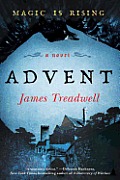
I brought up that aspect of storytelling in my ongoing Q&A with James Treadwell, author of Advent.

Most of the first part of Advent sticks closely to Gavin’s point of view as he travels from London to Cornwall and meets people. Then we start to follow some other characters as well: Horace, the Chinese-British boy; the minister; and so on. Meanwhile, there are interstitial chapters tracing the story of Dr. John Fiste backwards through time. How did you develop that narrative strategy? What challenges did it bring?

“Strategy”?

Sorry.

But seriously … As far as I can remember, I had the idea of a double narrative in mind from the start. At one stage I think I conceived of it fairly schematically: shorter, more lyrical, more ornate chapters would relate to the more explicitly fantastical material, while longer, plainer sections would tell the story of the present-day characters. It wouldn’t stay as neatly organised as that, but once it was underway it felt roughly right: two apparently very different strands of plot converging on a kind of hinge moment.

Some of the shifts in perspective and narrative voice just arrived out of nowhere, though. It’s that odd experience of ventriloquism which a lot of writers must experience: suddenly it feels like another voice’s moment to start speaking.

The challenges. Mainly, I suppose, it’s trying to get the pace right: the flow from one kind of narrative or point of view to another, the rhythm of suspense, the proportions of the plot. I wish I could say I get this right all the time but I know very well I don’t. It’s one of the aspects where I depend most on my (marvellously helpful) agent and editors to tell me when things aren’t working.

The other big challenge of this rather non-linear and intricate way of fitting a story together is, if I’m honest, the challenge to the reader. In the absence of a single consistent more-or-less omniscient narrator who goes through the plot from beginning to middle to end, there’s no doubt that it’s harder for the reader to be certain of what’s going on.

I’m all right with that, though.

MONDAY: Teenagers as fantastical beings.

06 July 2012

How the Romney Campaign Fudges Its Figures

Mitt Romney has made a lot of claims about the US economy under President Barack Obama. Most of them involve blaming him for the effects of the Bush-Cheney recession, widely recognized and reported as the worst economic downturn since the Great Depression.

Thus, the Romney campaign claimed this spring that President Obama has a “net negative record on job creation.” That math adds up only by including job losses in January 2009. For most of that month George W. Bush was President, and Obama clearly hadn’t had time to initiate any new economic programs.

Similarly, the Romney campaign claimed, “Women account for 92.3 percent of the jobs lost under Obama.” Politifact called that Mostly False, noting that it:
  • ignores the larger number of jobs lost by men in the two years before Obama became President.
  • blames Obama for job losses before his policies could take effect.
In fact, nearly all the Romney campaign’s analyses of Obama administration funding include the federal fiscal year that ended in September 2009, based on the budget resolutions signed by George W. Bush. Obama did initiate the stimulus in that year, and most economists believe that it preserved jobs. However, that didn’t happen right away (and anyway Romney opposes such Keynesianism except when he might be in charge).

The Romney campaign’s ways of measuring economic performance may not be logical, but at least they’re consistent—except when it comes to Romney’s own sole term in elective office as governor of Massachusetts. In that case, his people issued a press release that began: “Governor Romney Inherited An Economy That Was Losing Jobs Each Month…” It insisted that he shouldn’t be judged on net performance (as he was doing to Obama) but relative to what had come before.

It would be possible to have a reasoned, fact-based, political debate about the federal government’s role in stimulating job creation. But such a debate is only possible based on fair and unchanging standards. Instead, the Mitt Romney presidential campaign wants voters to believe that different, harsher, and unreasonable rules apply to President Obama. And people suffering from OIP Derangement Syndrome are only too happy to do that.

05 July 2012

Advent Under the Influence—of Magic?

In formulating my questions for James Treadwell, author of a new fantasy trilogy that begins with Advent, I worked from my own perspective on storytelling. I tend to plan out plots, though there are plenty of surprises in the composition process.

James’s answers make clear how he takes a different approach to storytelling, with less planning and thus more surprises. Or is that just British modesty? In any case, the conversation continues…

Advent draws on three enduring legends of western civilization: ancient Troy, King Arthur’s court, and Dr. Faust. (Plus mermaids.) Marlowe already linked numbers 1 and 3, but you take that combination in a different direction. How did you decide to braid those threads together?

You know what I’m going to say about the word “decide,” don’t you?

In all honesty, though, this is a difficult question to answer. (I’m sure that makes it a particularly good question.) Advent grew out of a few seeds — scenes, moments, glimpses of a character or two, an idea. The idea, very roughly speaking, was: magic. I think the notion of magic occurred to me in two ways. Firstly: what would it be like if something impossible happened? (This was very much tied up with my initial impressions of the character of Gavin.)

Secondly — and in one form or another this has informed a lot of fantasy writing, Susannah Clarke’s Jonathan Strange and Mr Norrell or Neil Gaiman’s American Gods or the John Crowley sequence that begins with Aegypt — what’s the difference between a world with magic and a world from which it’s absent, and how do you get from one to another?

So I began to think about a time when there was magic. And once I was doing that, I was probably always going to end up in the territory of legends. It’s murky in there, though, and I didn’t have a map. I didn’t know — for example — that the character associated with the Faust legend was who he is until after he’d made his first appearance.

Who and what have been your biggest storytelling influences?

I don’t think anyone can say who their influences are. I used to be an academic literary critic, and academic literary critics will tell you that influence is something writers suffer unwillingly and/or unwitttingly. (The critic Harold Bloom puns on “influenza,” which seems about right.)

Observant readers may gather some hints from the answers above, though...

SATURDAY: Wrestling with points of view.

04 July 2012

Cooper, Coleridge, and More in James Treadwell’s Advent


In its starred review for James Treadwell’s Advent, Publishers Weekly concluded, “Readers of Susan Cooper and Alan Garner will rejoice to find the first of a new trilogy worthy of sharing their shelf.” I know that’s especially gratifying for James since Cooper’s The Dark Is Rising was a touchstone for both of us growing up.

Our Q&A continues with an unseasonal discussion of the weather.

We’ve talked about winter scenes in English fantasy fiction before: Narnia under the White Queen, the blizzard that shuts down Buckinghamshire in The Dark Is Rising. Are you drawing on that tradition?

It would probably be more accurate to say that it’s drawing on me, if that doesn’t sound too affected … The instances you mention are certainly two of the most powerful fixed points in the imaginative geography I grew up with. (A third would be the snowbound planet called Winter in Ursula K Le Guin’s The Left Hand of Darkness.) I didn’t deliberately set out to echo them, but then that’s not how influence works, is it?

If my landscape made anyone think of The White Witch or Will Stanton and the Dark Rider, I’d be very happy indeed.

Advent starts with an epigraph from Coleridge:


If a man could pass through Paradise in a dream, and have a flower presented to him as a pledge that his soul had really been there, and if he found that flower in his hand when he awoke—Aye! and what then?
How did you pick that quotation, and what does Coleridge mean to you?

When I was at university, studying literature, I had a small notebook in which I scribbled down some phrases or lines that particularly struck me. I only know this because I found it a few years ago; I’d completely forgotten about it. I must only have kept it up for a few months at most. It strikes me now as a rather sophomoric thing to have done. Nevertheless, that quotation was in there, and the moment I saw it I knew it belonged to Advent.

In my former life I spent a fairly long time thinking quite intensively about Coleridge, though I don’t think that’s relevant to my book. The significance of the epigraph in relation to Advent is the unanswered — unanswerable — question into which the little visionary story collapses. Coleridge’s work has a genius for that. He’s the patron saint of tellingly failed endings.

TOMORROW: Questions of influence, and polite tussling about our different approaches to storytelling.

[The photograph above shows one of James’s sons in London back in the surprising winter of 2009.]

03 July 2012

Nobody Eats Dogs Here!

Artist Billy Nunez shares his concept sketches for “The Wizard of Oz in China” (which include some touches from other parts of the Pacific’s western rim).

(Hat tip to Bookshelves of Doom and io9.)

02 July 2012

Visiting Cornwall with James Treadwell and Advent

This week Atria releases the US edition of Advent, first volume of new British fantasy series by James Treadwell. I had the pleasure of reading an advance copy last year, and James graciously answered my questions about it. I’ll be running our Q&A over most of this week.

Almost all of Advent takes place in Cornwall. For American readers, could you describe that region of England, its place in British culture, and what it means for you personally?

For American readers, I’d suggest you take clichés about England (villages with old stone churches and cosy pubs, small wet green fields, stiles in hedges, briskly reserved people) and then mix them with clichés about Scotland (moors, heather, granite, fishing boats, craggy beards, vaguely Celtic romantic mysticism, grouchy locals). Once you’ve got those thoroughly blended, set about the whole lot with a hammer, to roughen it up and wear it down and break it into small pieces; then chuck the pieces together more or less at random and dump buckets of water all over them. Voilà. Cornwall.
[View from St. Michael’s Mount, Cornwall, by Bob Kingsley, via Flickr under a Creative Commons license.]

Culturally, Cornwall’s always been remote from metropolitan, prosperous, urbanised England. The old Cornish language’s closest relative is Breton, from the northwestern extreme of France, and there are towns everywhere named after saints no one else has ever heard of. When I used to go there on holiday from London as a child, to stay with my grandparents, it was (by British standards) a fairly serious car journey. The roads got smaller and hiller and twister the further southwest you went, and by the time you arrived you felt a very long way indeed from the capital. The infrastructure’s improved since then, of course, but you still catch something of the same feeling when you’re down there.

My grandparents moved somewhere less inconvenient many years ago, but I kept going to Cornwall anyway. I suppose that shows what it means to me personally. It gets in the blood.

I understand Cornwall is a great place to go in summer, but Advent is set there in the winter. How did you make that choice?

It didn’t feel like a choice … The story as it presented itself to me was always going to be wintry. If I tried to analyse why, I suppose I’d point to the fact that virtually all my childhood holidays in Cornwall happened outside the summers. More importantly, it’s a place that fills up in the summer, as you suggest, and Advent is in part a story about leaving the busy everyday world behind.

One of the characters in the book, who’s partly a native Cornishwoman and partly a holidaymaker from up-country, suggests that winter actually suits Cornwall better than summer. I’d be inclined to agree with her.
[View of Cornwall under a blanket of snow by Samuel Rich, via Flickr under a Creative Commons license.]

The final chapter of Advent takes us to another part of the globe. Are you choosing other settings that have special meaning for you?

It’s a setting I have some personal knowledge of and affection for, yes. I’m afraid I’ll have to take issue (again) with the suggestion that I chose it, though. The reason that part of the world becomes relevant to the story of Advent is to do with what my protagonist Gavin sees when he first goes into his new friend Hester’s house; and I didn’t really have any idea what he was going to see there until he walked in the door.

WEDNESDAY: When fantasy turns cold.

01 July 2012

The Economics of Oracle and Batgirl

Two weeks ago I wrote about how we can interpret certain heroes of the 1986-2011 DC Universe—Wally West, Cassandra Cain, and Stephanie Brown—as having successfully come of age.

In rebooting its universe, DC made most of its characters younger. If the company had returned those three to their original status as young heroes struggling under their elders’ shadows and other burdens, that would erase their hard-won achievements and disappoint their biggest fans.

But then I asked, “Why doesn’t the same logic apply to Dick Grayson, Tim Drake, and Barbara Gordon?” Comics readers have seen all of them grow up along their intersecting paths:
  • Dick as Robin, Nightwing, Batman briefly, Nightwing again, and finally Batman, evidently to stay.
  • Tim as Robin and then Red Robin.
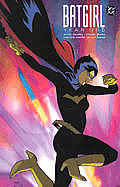
  • Barbara as Batgirl and then Oracle.
Yet with the 2011 reboot of the DC Universe, Dick is once again Nightwing and Barbara once again Batgirl. Both those heroes are apparently in their early twenties. All three characters are once again dealing with the shadow of Bruce Wayne as Batman.

The first factor in this restoration of the status quo ante is simply economics. Versions of all three characters were featured in the Batman television series, live and animated. Many more people saw those stories than were reading the last two decades of comic books.

That factor seems to be most influential in the case of Barbara Gordon. Originally created at the instigation of the Batman television producers, her initial conflict was trying to keep up with the Dynamic Duo while hiding her masked crime-fighting from her father, Police Commissioner Gordon. For a while she was a US Congresswoman (with Dick Grayson as a young aide and eager romantic interest). That suggested she had indeed come of age.

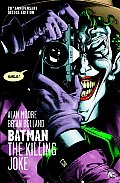
Not knowing where to take Barbara after that (and with Dick romancing Koriand’r in New Teen Titans), DC Comics benched her in the 1980s. Then the company approved Alan Moore’s proposal to have the Joker shoot and paralyze her in Batman: The Killing Joke (1988).

Subsequently Kim Yale and John Ostrander, an editor-writer team and couple, developed a new role for Barbara Gordon: as Oracle, mysterious computer mastermind, online investigator, and super-police dispatcher. In comics like Suicide Squad, Batman: Gotham Knights, Birds of Prey, Justice League, and two Batgirl series starring younger teen protégées, Oracle pulled strings throughout the DC Universe. Her physical disability coupled with online mobility both reflected her past and personality and produced an unresolvable foundational conflict that generated stories.

But Oracle’s networking was tied into the complexity of that DC Universe, and the company feared that complexity was scaring off new readers. And, as I wrote above, millions of TV viewers knew Barbara Gordon as Batgirl. So back she came.

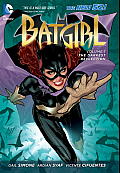
For the new universe, DC didn’t erase Barbara’s past as Oracle, paraplegic computer jock. But it did shorten that period to about three years, delete the Birds of Prey team she created, and completely restore her athleticism. Those changes rendered her work as Oracle far less important. Writer Gail Simone is exploring the psychological trauma of the Joker’s attack, and that may become part of the character’s new foundational conflict. But for many readers Barbara had already overcome that trauma by remaking herself as Oracle.

As well reviewed as Simone’s stories are, the removal of the 1986-2011 continuity’s Oracle does seem like an unreplaced loss and a disappointment. There was still a lot of story potential in the character’s previous situation.

However, the most recent sales figures (for May 2012) show DC selling nearly 59,000 copies of Batgirl through the Diamond wholesaler while the sales of the last issue starring Stephanie Brown (from August 2011) were below 23,000. It would be hard to convince the publisher that it had made a mistake when sales are up over 250%.

COMING UP: And Tim and Dick? This is the weekly Robin, after all.

30 June 2012

The Wicker Man as a Musical

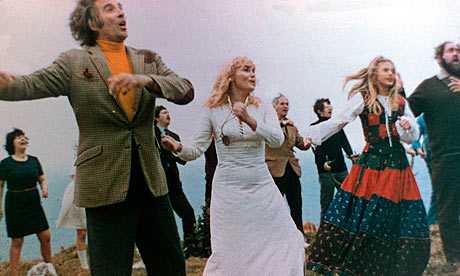
Last night I watched The Wicker Man, the 1973 cult horror film starring Christopher Lee, Edward Woodward, and Britt Ekland. Shot in Scotland, it follows an uptight police sergeant as he searches for a missing child on an island whose populace has reverted to scenic British pagan rituals.

And all throughout the movie, till the very last scene, I was thinking, “This is an effin’ musical!” The cast keeps breaking into song and dance. Not the uptight sergeant, of course, but everybody else from the local schoolboys dancing around the Maypole to Lee at his piano and Ekland (and her body double) in nothing at all. Those musical scenes do more to reveal character than most of the spoken dialogue—though of course most of the characters are hiding something.

In that respect, The Wicker Man plays like an inverse of The Music Man. In Meredith Wilson’s masterpiece the stranger brings music to a community, while in Anthony Shaffer’s story the stranger finds a disturbing community already absorbed by music. In both cases, the community absorbs the stranger in its own way.

I see by the web that the National Theater of Scotland actually decided to adapt The Wicker Man into a stage musical earlier this year. The Guardian reported, “Previous attempts to stage The Wicker Man have stalled over failure to secure the rights to the music. [Co-writer Greg] Hemphill proudly promises that their version will feature every note of the original.” That soundtrack included genuine folk songs and new compositions by Paul Giovanni. I doubt the stage can get the eerie effect of bad lip-synching, though.

On the other hand, the Guardian’s Danny Leigh really didn’t like the sing-along Wicker Man screenings two years ago. Horror films and musicals are supposed to be two different kinds of fun.

29 June 2012

Killed Bill, Part 2

This week’s example of OIP Derangement Syndrome is provided by Sen. John Kyl, Republican of Arizona. After the U.S. Supreme Court issued its ruling on Arizona’s attempt to have local police enforce national immigration law, Kyl issued a statement that claimed:
I note that in his response to today’s Supreme Court ruling, President Obama called on Congress to pass comprehensive immigration reform. I also note that the bipartisan comprehensive immigration reform bill I helped draft in 2007 was killed — in part — by then-Senator Obama.
Kyl referred to the Comprehensive Immigration Reform Act of 2007, which Wikipedia describes this way:
The bill's sole sponsor in the Senate was Majority Leader Harry Reid, though it was crafted in large part as a result of efforts by Senators Kennedy, McCain and Kyl, along with Senator Lindsey Graham, and input from President George W. Bush, who strongly supported the bill. For that reason it was referred to in the press by various combinations of these five men's names, most commonly "Kennedy-Kyl".
As a U.S. Senator, Barack Obama voted for cloture on that bill—i.e., for bringing it up for a final vote. Sen. Kyl ended up voting against cloture, thus “killing” the bill. Both sides of those cloture votes had a mix of Democrats and Republicans, with most Democrats for and most Republicans—once again, including Kyl—voting against it.

Kyl’s shift presaged a longer, severe change in his attitude toward immigration reform. In 2010, Graham (R-SC) and Sen. Chuck Schumer (D-NY) started talking about a bill based on the same framework as the “Kennedy-Kyl” bill, and Kyl promised to filibuster it. Think Progress noted:
Ironically, in 2007, Kyl sponsored an immigration reform bill that included many of the same basic principles that Schumer and Graham have adopted as part of the framework for their own bill. Kyl has argued that this time around is different because the “consensus” behind the bill he co-sponsored “has all but evaporated.” Given the fact that Schumer and Graham have simply provided a broad blueprint of what is still only an idea for an unwritten bill, it seems odd that Kyl is so quick to come out against it — especially considering the fact that he took a much different approach to immigration reform in 2007.
What changed between 2007 and 2010? Barack Obama became President. By pointing at Obama in his statement, Kyl subconsciously acknowledged that that event was significant in his changed thinking, but he got the facts about who killed his bill exactly backward. That combination of shifting positions, misstatement of facts, and blame for the President is the hallmark of OIP Derangement Syndrome.

28 June 2012

Bill Willingham on Oz in the Fables Universe

Sequential Tart interviewed writer Bill Willingham, who’s been slowly unrolling some Oz-themed storylines in his Fables comic book:

ST: I have a couple of questions about some of the current storylines. What led to the idea of Bufkin leading a revolution in Oz? Frank L. Baum had some strong political opinions; did that play into at all?

BW: To a certain extent. My reading of the Oz books was woefully antiquated in that I did it early on in life and hadn't revisited them as often as I should. And this is what I found out about Oz readers: Oz readers are fanatical readers. They want things correct. The few dips I've made into the Oz world had readers and some of the people who work in the Fables camp, like Eric Shanower, who has done the odd Fables book, and who, of course, is a massive Oz fan [Shanower writes Oz-themed comics for IDW and Marvel Comics], and Todd Klein, our letterer from day one: massive Oz fan — which apparently is a redundancy. There's no such thing as just a middle-of-the-road Oz fan. They called me out on the tiniest little thing. It is not the Lunchpail Tree; it is the Lunchbox Tree.

I realized that if I wanted to play in Oz at all, which I wanted Bufkin to eventually do again someday, I'd have to either have all my ducks in a row and massively re-immerse myself in the Oz stuff — or create a situation wherein I'm the only expert, [and can say], "Todd, Eric, what you don't understand is that when the Adversary conquered Oz, he made all these changes and all these changes are inscribed only in my mind, so nyah nyah, here's the way it is now, and you're just going to have to live with it."

I decided to go that route, so Bufkin finding that the whole place was conquered and overrun by the gnome king, who, when the big empire fell, continued on with his little local empire. Well, it was obvious that Bufkin, having defeated the djinn and slain Baba Yaga would think, "Overthrow a dinky little side-empire like this? Easy." It almost wrote itself, and it solved the problem of these guys who could so easily point out where I got things wrong.
I suspect Sequential Tart asked about Baum’s “strong political opinions” because he was progressive for his time while Willingham identifies himself as a conservative. But Willingham didn’t address that potential conflict.

I’ve written before about how the Ozma and Dorothy of Willingham’s Fables universe bear little resemblance to Baum’s characters. In contrast, Jack Pumpkinhead, the Sawhorse, and the Glass Cat act quite familiar. As for Bufkin, he’s a true original.

(Hat tip to Blair Frodelius’s Daily Ozmapolitan.)