31 October 2009

What Big Teeth You Have

The Boston Museum of Science has just opened “Harry Potter: The Exhibition,” which offers “more than 200 authentic props and costumes from the Harry Potter films, all displayed in settings inspired by the film sets.” This brings up two thoughts for me.

(Shorter) What the hell does this have to do with science?

(Longer) Back in 1995-96, the same museum hosted an exhibit inspired by the Jurassic Park movie, which at least was science fiction. I volunteered as a docent on weekends, showing off small fossils and casts in the midst of the big models of Velociraptors, Triceratops, and the legs of a mechanical Tyrannosaur. (The rest of that character had been created through models and CGI, like Sam Neill.)

I remember several television monitors played endless loops of short clips from the movie and from “behind the scenes” and “the science behind the story” interviews of the sort that now show up on DVDs. In fact, I can’t help but remember those loops. Their sounds have been grooved into my brain.

Most of the items I had to show visitors were resin casts—of different dino-teeth, of a smooshed ’raptor skull, and so on. There was one real fossil, heavy as the rock it had been turned into, which I let kids hold before telling them what a coprolite was. Hee hee.

More specific memories:

  • Only one visitor asked why, if real Velociraptors stood only knee high, but paleontologists have found similar species as big as the monsters in the movie (e.g., Utahraptors), why didn’t the filmmakers use the larger species? I had to explain that I hadn’t actually made the movie.
  • One boy came to me in tears because he’d lost track of his mother in the crowd. I struggled to explain that there was only one way out of the room he’d seen her go in, and we were standing in that archway, so he was bound to see her again. Before I could finish, the boy did indeed spot his mother and flung himself against the back of her knees. She seemed as baffled as I was.
  • One wall of the exhibit was made to look like the electrified fence in Jurassic Park, with a big DANGER sign hanging from one of the horizontal wires. If you shuffled your feet on the carpet and touched a wire, about half the time you’d produce a tiny static pop. Since lots of teenagers don’t lift their feet when they walk, more than a few ended up sparking against that fence, which was always good for a few squeals.
When the exhibit closed, I heard that it was one of the most popular and lucrative the museum had ever hosted. Which explains why, thirteen years later, the Museum of Science is trying to find science lessons in Harry Potter.

30 October 2009

An Honor Just to Be Nominated

The Online School has chosen Oz and Ends as one of its “100 Best Book Blogs for Kids, Tweens, and Teens.”

The site says, “The bulk of these posts focus on fantasy literature and comics for youth.” (Subtext: The rest? Well, we don’t really know where he’s going with that.)

Lots of other recommended blogs to check out, of course. And other postings, such as “100 Tools to Turn to When You Have Writer’s Block.”

29 October 2009

Two Out of Three Ain’t Bad

In The Insider’s Guide to Creating Comics and Graphic Novels, IDW editor Andy Schmidt lists three ways that comics creators can please editors: high-quality work, speed, and communication skills.

Those same qualities also came up in the advice passed on by a British artist during a panel discussion at last year’s Birmingham International Comics Convention, podcast by the Geek Syndicate and Word Balloon.

(Which British artist? I wish I could tell their voices apart. And in any case he didn’t take credit for the advice; he said he’d heard it from an older artist when he was starting out.)

The key to steady work as a comics illustrator is to be two of these three things:

  • Very good at what you do.
  • Very reliable on deadlines.
  • Very easy to work with.
Be two of those things, the wisdom declares, and you’ll always have work.

So you can be an extremely talented artist who’s fun to work with, and editors will accept that you don’t always hit your deadlines. You can be very talented and fast, and editors will put up with how you’re a lousy human being. And you can turn in mediocre work, but deliver what the company asks for on time with a cheerful and supportive smile, and editors will keep hiring you.

On the other hand, no matter how talented you are, if you’re unreliable and difficult, editors will gladly hire a lesser artist who’s not.

I don’t think the same rules apply so strongly to parts of publishing that are less dependent on deadlines. But they still seem like valuable rules for life.

28 October 2009

No Ultimate Evil in Oz

In an essay on the Awgwas and Phanfasms, who are about the nastiest, scariest creatures L. Frank Baum ever wrote about, Nathan DeHoff concluded:

One thing we really don’t see in Baum’s fantasy universe is an ultimate evil along the lines of Sauron or Voldemort. About the closest we get is Zog, and he’s killed off in the same book that introduces him [Sea Fairies]. I know some fans have tried writing such a being into Oz, but they’ve generally reported that it didn’t work out. Maybe that’s actually a good thing, as the Almighty Lord of Evil is sort of a cliché by this point.
Plus, the concept of embodied evil doesn’t fit with how the Oz books depict human nature.

Other fantasy universes include people naturally endowed with magical powers. In Oz, there are some magical beings (usually lumped together under the catch-all term “fairies”), but all humans can do magic if they have the right knowledge or the right tools. Baum often says that Dorothy is just an ordinary little girl, but when she gets hold of the Magic Belt—look out! There are no inherently magical people, just people who choose to learn magic.

Similarly, the books imply that all people can be good or bad, depending on their choices. True, The Wonderful Wizard of Oz offers characters named the Good Witch of the North and the Wicked Witch of the East, but it doesn’t say those women were born to those roles. And Baum’s storytelling in that book is in a different mode from how he created his others, as I wrote last year.

More typical is how Baum introduces the villain in The Lost Princess of Oz (1917):
A curious thing about Ugu the Shoemaker was that he didn’t suspect in the least that he was wicked. He wanted to be powerful and great, and he hoped to make himself master of all the Land of Oz that he might compel everyone in that fairy country to obey him. His ambition blinded him to the rights of others, and he imagined anyone else would act just as he did if anyone else happened to be as clever as himself.
Ugu isn’t the servant of a dark lord or black force—he’s just selfish.

But perhaps in this cosmology selfishness is evil. That could well be so, but characters in the Oz books don’t defeat selfishness through magic. Rather, villains are deprived of their powers and then pressed to make up their own minds about whether to behave better. Some do, and some don’t. Here’s how The Lost Princess of Oz ends, with Dorothy having transformed Ugu into a dove:
“Are you sorry, then?” asked Dorothy, looking hard at the bird.

“I am very sorry,” declared Ugu. “I’ve been thinking over my misdeeds for a long time,…and I’m surprised that I was such a wicked man and had so little regard for the rights of others. . . . But with the kind forgiveness of my former enemies, I hope to become a very good dove and highly respected.”
There are some fine fantasies about saving the world and defeating evil, but the Oz books aren’t in that group. They’re almost all stories about getting home, whether that home is Kansas or the Emerald City or some other safe place of one’s own choosing.

27 October 2009

How Economics Shapes a Web Comic (Literally)

Todd Allen, author of The Economics of Web Comics, laid out some of the economics behind his own new web comic, Division & Rush, in an article for Publishers Weekly:

Going into this, my built-in revenue stream is a set CPM rate based on traffic. (CPM—cost per thousand is a standard unit for Web advertising.) Think of it as the digital equivalent of royalties off sales. This isn’t an unusual arrangement for online content, but it does have certain implications for comics.

The language used in my initial meeting was “graphic novel,” which connotes comic book-style pages. That’s a lot of art work for one page view. If you write a long text article online, the article gets broken up into pages of roughly 600-1000 words, depending on the website. I decided the thing to do was set up the comic as comic book pages laid out on a grid system. Two columns and two or three rows (4 panels or 6 panels). Then each row would be shown as a single page for viewing.

Advantages:
  • Most of the general public is still used to reading comics as a strip format, and this closely approximates the strip format
  • It increases the page count, which means it increases income (artists need money)
  • It’s still focused on a page, so when it’s time for a print collection, less fuss.
In terms of delivery, I’ve bought into the idea of the “satisfying chunk” of comics reading. . . . With this in mind, I settled on 5-page chapters, one chapter per week, and roughly 12 page views of strips.
Allen acknowledges that he’s in the fortunate position of creating this comic for the Tribune-backed site ChicagoNow, so he doesn’t have to draw an audience from scratch.

He goes on to discuss the other web comic revenue streams of merchandise (e.g., “t-shirts spinning out of the gag strips”) and paid downloads (“The x-factor, right now”).

26 October 2009

A Staggering Work of Heartbreaking Genius

Of all the reviews I’ve seen about Spike Jonze’s movie adaptation of Where the Wild Things Are, one of the most incisive comes from student dn in Monica Edinger’s class at the Dalton School:

Where the Wild Things Are is a good movie. The only problem is there is not an appropriate age to see this movie.
I take “appropriate age” as reflecting the idea that there’s a level of maturity at which one can relate to the emotions and milieu of a movie without also being troubled by them. And there’s no such age for children or adults because Where the Wild Things Are is a troubling movie.

Far more troubling than Maurice Sendak’s masterful picture book, which explores young Max’s wildness only to bring him, and his readers, back home. Of course a ten-sentence book must change to become a two-hour movie. But the movie’s story, fleshed out by Jonze and Dave Eggers, isn’t just a longer journey over the same path. It’s different in fundamental ways, producing a deeper and less reassuring work of art.

In the picture book, the Wild Things are reflections of Max’s wild mood. By taming them, exercising them, and finally leaving them behind, he gets himself back under control. Those Wild Things come in different shapes and colors, but they don’t have individual names or differentiated personalities. They’re wildness in general—Max’s own wildness in particular.

In contrast, the Wild Things in the movie have names: Carol, K.W., Alexander, and so on. And they have distinct personalities, broadly drawn. Some critics, such as Claire E. Gross at The Horn Book, interpret them as reflections of Max: “Each Wild Thing embodies a different aspect of Max’s psyche — his anger, loneliness, disaffection...” But that typology provides no place for officious Douglas or depressed and sniping Judith.

Carol, the most prominent Wild Thing in the movie, has the same problems as Max: feeling abandoned and lashing out. It’s only natural that they bond most closely. But Carol isn’t simply a manifestation of the boy’s angry mood; he’s a separate character. All the Wild Things are difficult personalities writ large, and beyond Max’s control.

As disconcerting as it might be, I think we have to consider the possibility that within the movie’s reality Max’s entire visit with the creatures occurs just as we see it. In the picture book, his bed and room clearly melts into being his boat and the sea, and he famously returns before his supper gets cold. The movie doesn’t provide the same sort of reassurance that the adventure is all pretend, taking place within Max’s psyche. From what we see and hear, he is really away for days on an island of monsters. Jonze is, after all, the director of Being John Malkovich and Adaptation, neither fully in the world we know.

In the book, Max chooses to leave the Wild Things because he gets homesick. It’s entirely his choice. In the movie, Carol turns against him, and he leaves in part out of fear, in part out of the realization that he can’t make the Wild Things’ lives perfectly happy, as he’d promised them—and himself—that he’d do. And that’s what so troubling. While the book’s Max controlled the fantasy land, the movie’s Max cannot.

Some critics make much of how some of Max’s early episodes of anger come in response to family tensions: his teenaged sister wanting to be with her older friends, his divorced mother having a boyfriend. But he also wears a wolf suit, rough-houses with the dog, and plays kill-the-man on the school playground with no link to those family frustrations. Max feels and acts wild at times like any nine-year-old boy; his family struggles just hurt the worst.

I think the ultimate lesson in Jonze’s Where the Wild Things Are is that such struggles will always be with us. Max can’t escape them in his family life. (What younger sibling doesn’t watch the older sibling become more distant?) And Max can’t shield his furry new friends from sadness, either. Their troubles arise from their own personalities, rivalries, and resentments.

We can’t make everyone’s life happy. All we can do is show our family and friends that we love them, whether by making a heart out of twigs or by serving warm soup, and hope that in the long run that’s enough.

That’s not the level of comfort we expect from a children’s film. Or from any genre film. But it’s the emotional experience we should expect from a work of art.

25 October 2009

Man’s Best Sidekick

As we look ahead to Halloween, I have the sad news that this costume is out of stock.Click on the picture for some other options from BuyCostumes.com.

23 October 2009

Mary Sues of the 19th Century

Months back, I noted this passage from “Too Good to Be True: 100 Years of Mary Sue”, by Pat Pflieger. For those who have had the pleasure not to encounter a “Mary Sue,” the term was invented to classify some fanfiction writers’ tendency to insert original characters into established worlds—too-perfect characters who, it becomes clear, are stand-ins for the writers and all that they wish to accomplish or say in that world.

But the phenomenon well predates the moment adolescents had the bright idea of writing their own Twilight, Harry Potter, or even Star Trek stories.

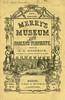
Nineteenth-century versions appear in the pages of Robert Merry’s Museum. Founded in 1841 by Samuel Goodrich, by the time the magazine was absorbed by the Youth’s Companion in 1872, it had featured works by every major nineteenth-century American writer for children, from Goodrich to [Louisa May] Alcott, Jacob Abbott, Mary Mapes Dodge, and Sophie May.

It also published works by lesser literary lights, most notably the subscribers themselves, who made the magazine their own from 1857 to 1868. While boys tended to write non-fiction articles, girls most often wrote stories and poems—some about wonderful girls whose accomplishments and charms are tangibly appreciated by those around them.

Emily Martin, who in 1862 saves a sleeping Indian chief from certain death by bear; Maia, whose gentleness and kindness are extolled by animals and elves in 1858; Unella, a white child raised by Native Americans in 1865, so lovable that she holds the entire village in a gentle thralldom; even little Ellen, who dies beautifully of her mother's thoughtlessness in 1849—all have elements we associate with Mary Sue.
Most of Pflieger’s essay is about examples and traits of the modern Mary Sue. But it’s refreshing to realize that she’s always been with us.

Check out Pflieger’s website on “Nineteenth-Century American Children and What They Read” for more images and stories from Robert Merry’s Museum and other popular magazines of the era.

22 October 2009

Marks of Irony and Sarcasm

At the recent gathering of children’s-book bloggers in Washington, I understand that mention was made of my past reports on humanity’s long quest to typographically signal sarcasm or irony. Though the internet has exacerbated this need, I’ve noted that some English writers discussed it 200 years ago. And I once suggested that the backslant could work as italics does, except by signaling reversal instead of emphasis.

Alas, adding a backslant style to every font and getting the new versions installed on every computer would be a lot of work, and we’d still have to teach people what the new letterforms mean. The same problems stymie the invention of new punctuation, such as Choz Cunningham’s 2006 proposal at Typophile of a mark called “the snark,” which looks like an exclamation point that’s given up and laid down.

People have therefore sought to popularize sarcastic uses of punctuation marks that are already on the standard English keyboards but of little use. For example, at my latter posting, an anonymous commenter replied:

We need to use the TILDE!
it works perfectly
~i'm so smart~
and we don't use it for anything but decoration anyway
However, a peek behind the tilde entry on Wikipedia shows that this usage is still evolving. The first suggestion that anyone was using the tilde to indicate irony appeared there in February 2008, and that contributor suggested it should appear at the end of a sentence, not around a statement.

A much older suggestion, through Wikipedia, starts with the seventeenth-century English printer Henry Denham’s mark to signal a rhetorical question:
How do you like them apples؟
Denham called this a percontation mark. It soon fell into abeyance.

In 1899, The Bookman’s “Literary Paris” columnist Adolphe Cohn reported to his American readers:
A new writer, who is much talked of just now, is M. Alcanter de Brahm. He has published a book, L’Ostensoir des Ironies, intended to demonstrate that the reader of modern books has to be told when the author intends to be ironical and when not, and he therefore advocates the creation of a new punctuation mark, the point d’ironie.
The new writer was actually an anagrammatic pseudonym of a minor French poet named Marcel Bernhardt. He suggested using a question mark reversed in some way. Wikipedia states it was a horizontal reversal producing a variation on the backwards question mark above. Wayne C. Booth’s A Rhetoric of Irony (1974) says Bernhardt/de Brahm suggested using the upside-down question mark from Spanish—
So we can see what a splash the idea made¿
Only one language seems to have a typographic signal of reverse meaning already in widespread use, and I learned of it through a familiar but unexpected source. Back in 2005, Neil Gaiman wrote on his blog:
(If I say “in my copious spare time”, can we all agree that it should be read as if someone had actually invented the sarcasm mark as a unit of punctuation, and that “in my copious spare time” can be assumed to be inside sarcasm marks?)
And then this month he added:
The last time I posted here about the lack of sarcasm marks in punctuation, people wrote in to tell me that there are Ethiopian languages that actually have a written sarcasm mark, intended to show the world that the person writing means the opposite of what he says. So if anyone is translating this blog into Ethiopian, you’ll need to put sarcasm marks around that bit of yesterday's post.
Language Log has also taken note of that punctuation mark, which is known as Temherte Slaq. It reports, “The Unicode representation of the punctuation mark is evidently under debate among Ethiopian scholars.”

And what is the crux of that debate? A paper titled “A Roadmap to the Extension of the Ethiopic Writing System Standard Under Unicode and ISO-10646,” by Asteraye Tsigie, Berhanu Beyene, Daniel Aberra, and Daniel Yacob, states:
Graphically indistinguishable from U+00A1, Temherte Slaq differs in semantic use in Ethiopia. Temherte Slaq will come at the end of a sentence (vs at the beginning in Spanish use) and is used to indicate an unreal phrase, often sarcastical in editorial cartoons. Temherte Slaq is also important in children’s literature and in poetic use. Debate is needed among Ethiopian scholars to determine if inverted exclamation mark is acceptable.
In other words, even though experts agree the Temherte Slaq is “graphically indistinguishable” from a punctuation mark already in use, some insist it deserves its own unique coding.
And that wouldn’t delay the worldwide adoption of the Temherte Slaq at all¡

21 October 2009

When Characters Get Stuck in Time

Jerry Ordway is a longtime DC Comics artist who’s drawn many of the company’s iconic characters. He stepped in to complete the art for The Brave and the Bold: The Book of Destiny when George Pérez stepped away from the Mark Waid story, and the shift is pretty seamless.

At the time, Ordway gave an interview to Newsarama in which he made an interesting remark about the company’s most lucrative trademarks:

NRAMA: What about the characters themselves? Some comics characters change to reflect their times, but are most DC Comics characters so iconic that they withstand the effects of time?

JO: The characters evolve over time to reflect the era they are produced in, really. Superman today is not the same Superman that was published in the 1990s. Evolve or fade away is apt. Look at great fiction characters of the past, who didn’t have a continuous publication to bridge the gap—Doc Savage, the Shadow, Lone Ranger—all terrific concepts, but each stuck in an era they were last viably published in. So, while I don’t like the lack of pure selfless heroics in superhero comics today, I understand they reflect a different world than my own childhood.

Superman and Batman are pretty much timeless concepts, and icons that seem hard to ruin. For most of us, we love our favorites and remember them in the context of when we first discovered them. With [Mark] Waid’s love of the ’60s DC stuff, he has captured a really viable way of handling the Challengers of the Unknown, which is fun. That concept, like Blackhawks, and Metamorpho have a hard time sustaining sales in recent times because they belong to a different time.
If I understand Ordway, he suggests that Superman, Batman, Robin, and other characters who have maintained popularity for decades feel timeless precisely because they’ve changed with the times, while preserving core traits and imagery. Whereas other characters that stopped being published also got stuck in the last period to which they had evolved, and thus came to symbolize the past.

Of course, companies stop publishing stories about characters because their sales fade, meaning they’ve already stopped appealing to readers as much as they once did. Still, it’s a provocative way of thinking about “timeless” icons.