24 November 2023

“High-binders” Escape from New York

As I recounted here, the term “High-binder” or “hide-binder” appeared in the New York press in late 1806 and early 1807 after disturbances in the streets around Christmas.

At first it referred to a particular set of anti-Catholic rowdies. Soon it was being slapped on working-class Catholics instead.

In subsequent newspaper items, we can see the term spread outside of New York, though still tied to that place of origin. The 28 Apr 1813 Tickler of Philadelphia described the neighborhood of “Gotham, (New York,)” as: “Here the sailor, the ropemaker, the cookey boys and hide-binders resort to enjoy the jollifications…”

By the 1830s, “high-binder” had become the standard form, and the word was one of many labels for criminals:
  • “among the thieves and high-binders of the world” (Philadelphia Daily Chronicle, 19 Apr 1832)
  • “a posse of high-binders” (Newburyport Herald, 4 Aug 1835)
  • “a gang of high-binders, so called” (New-York Daily Express, 6 Jul 1837)
  • “the most desperate high-binders that ever graced a drunken revel upon the ‘Five Points’” (Hudson River Chronicle of Ossining, 27 Mar 1838)
  • “a set of ‘high-binders’” (Baltimore Sun, 16 Sept 1839)
Most newspaper editors were still setting the word off in some way to acknowledge it could be unfamiliar to readers.

In 1839, one newspaper near the Mason-Dixon Line used the term to headline an article about gamblers, both black and white (Baltimore Sun, 31 October). Another claimed that New York’s political “ultras” were adopting that label among others to seem even more scruffy and democratic (Alexandria Gazette, 5 November).

Over the following decade, Americans began using the word for corrupt politicians, not just street-level criminals. Among the rising literati, both Edgar Allan Poe and James Kirke Paulding revived the form “hide-binder” to show they were in the know. But the label was losing its power and starting to sound stale.

TOMORROW: High-binders head west.

(The picture above is George Catlin’s 1827 view of the Five Points neighborhood, now at the Met.)

22 November 2023

The First High-Binders

I’ve been reading about San Francisco before the big earthquake of 1906, and one word that comes up a lot is “highbinder.”

Merriam-Webster defines that as “a professional killer operating in the Chinese quarter of an American city,” or alternatively “a corrupt politician.”

There were plenty of corrupt politicians in Gilded-Age San Francisco, but in the newspapers of the time and in histories since the term “highbinder” definitely meant a thug of Chinese extraction.

I wondered what the etymology of that term was. What were those men binding, and how high? Was is something to do with queues, or Chinese dress?

It turned out the answer lies in the early 1800s, and it has nothing to do with Chinese-American culture at all.

The term surfaced in New York City at the end of 1806. The Evening-Post of 26 December reported on a riot the evening before this way:
There has for some time existed in this city, in and about George and Charlotte-Streets, a desperate association of lawless and unprincipled vagabonds, calling themselves High-binders, and which, during the last winter, produced several riots, making the demolition of houses of ill-fame the ostensible object of their disorderly practices.
The Weekly Inspector of 27 December stated:
On Christmas Eve, a party of banditti, amounting, it is stated, to forty or fifty members of an association, calling themselves High-binders, assembled in front of St. Peter’s Church, in Barclay-street, expecting that the Catholic ritual would be performed with a degree of pomp and splendor, which has usually been omitted in this city. These ceremonies, however, not taking place, the High-binders manifested great displeasure, but were at length prevailed on to disperse.
I should clarify that these original High-binders wanted to jeer at and disrupt a high Catholic ceremony inside St. Peter’s Church (shown above), not to participate. They were a Protestant, probably nativist gang.

The High-binders’ actions on Christmas Eve provoked counterattacks by Irishmen the next day. Those fights escalated until a town watchmen was killed. Although the police arrested only Irishmen at first, the Republican Watch-Tower of 6 Jan 1807 (misdated 1806 by its printer) said, “It is shrewdly suspected that the murderer will yet be found among the ruffians denominated high binders.”

The Bowery Boys site tells the story of the Christmas Riot of 1806 here.

On 24 Jan 1807, the American Citizen, another New York paper, reported on the trials arising from that violence. Its editors did their best to sort out the sides. They also stated that the correct term was “hide-binders,” for men working in the leather trade.

Within just a few months the May 1807 Weekly Inspector published this item at the end of a column:
An American bull.—An American, speaking of the turbulent conduct of the “hide-binders,” observed that these low Irishmen were so used to being hung, that they could not live without it.
Just five months before the High-binders had burst onto the New York scene by besieging a Catholic church and then brawling with its Irish defenders. Now the term had become a pejorative label slapped onto “low Irishmen” since apparently only they could be thugs.

COMING UP: Spreading out of New York.

17 November 2023

The Return of “The Fuzzy Ghost”

This week I received my contributor’s copy of The Big Book of Things That Go Bump in the Night: A Collection of Utah Horror.

This anthology of “27 stories, poems, and flash fiction pieces, all geared toward kids” is published by Timber Ghost Press and available here.

My story, “The Fuzzy Ghost,” is much older than its target audience. It’s a tale about a family coming to terms with the death of a relative, and I wrote the first version in the 1990s after the death of my own older brother, Al.

At one point I had interest in the story from a kids’ magazine company, but the editor of the magazine I’d submitted to thought it would work better for the next-younger audience. I wrote another version, half the length to fit the second magazine’s specs. But for a story that depends on mood, that took away too much, and the revision didn’t sell.

Back then, kids’ magazines were practically the only market for such short fiction, and they had very strict limits on word counts. Technology has made internet magazines, micro-press anthologies, and even story vending machines viable, and that in turn has opened up the specs for stories.

Last year, as I continued to process the death of my mother, I spotted Timber Ghost Press’s call for submissions. I dug the latest draft of “The Fuzzy Ghost” out of my hard drive, updated it with specific period details, and sent it in. And now it’s come back to me inside a paperback book.

14 November 2023

“In the Land of Oz they use no money at all”

In The Road to Oz (1909), L. Frank Baum wrote:
“Money! Money in Oz!” cried the Tin Woodman. “What a queer idea! Did you suppose we are so vulgar as to use money here?” . . .

“If we used money to buy things with, instead of love and kindness and the desire to please one another, then we should be no better than the rest of the world,” declared the Tin Woodman. “Fortunately money is not known in the Land of Oz at all. We have no rich, and no poor; for what one wishes the others all try to give him, in order to make him happy, and no one in all Oz cares to have more than he can use.”
That contradicts this detail in The Wonderful Wizard of Oz (1900):
…a man was selling green lemonade, and when the children bought it Dorothy could see that they paid for it with green pennies.
And also The Marvelous Land of Oz (1904), in which a ferryman asks for money before rowing Tip across a river, the Emerald City and the Winkie castle have treasuries, and all the characters recognize “dollar bills—and two-dollar bills—and five-dollar bills—and tens, and twenties, and fifties.”

Apparently something happened after Ozma came to the throne of Oz at the end of the latter book, producing an entirely different economic system that Baum explained more fully in The Emerald City of Oz (1910).

However, I was surprised to see that the very first mention of Oz doing without money actually appeared outside the series, and outside the canon. The Woggle-Bug Book, a storybook Baum wrote in 1905, contains this paragraph:
You see, in the Land of Oz they use no money at all, so that when the Woggle-Bug arrived in America he did not possess a single penny. And no one had presented him with any money since.
That book doesn’t offer any ethical lesson to go along with the lack of money, as the Tin Woodman would volunteer in The Road to Oz. It’s just another way that the Woggle-Bug’s native land differs from America.

While featuring a character from Oz, The Woggle-Bug Book is set in America, where we use money. It’s one of what I call Baum’s urban fantasies, taking place in a contemporary, multiethnic American city which nonetheless has magic (in that way contradicting the rules of the Oz books he wrote in the same period).

The Woggle-Bug Book and the Queer Visitors from the Marvelous Land of Oz comic page that preceded it were never listed as part of the Oz series, and Baum never referred back to them in his later stories. Thus, fans don’t treat whatever those books say about Oz as reliable for the rest of the series. Nonetheless, in that book Baum first tried out what would become a crucial detail of the Ozian utopia.

22 September 2023

Fitzgerald and “Second Acts”

At lunch today, a friend and I invoked the line “There are no second acts in American life,” and then weren’t sure where it came from. We thought it was F. Scott Fitzgerald, but how, and what did he mean?

So this afternoon I looked it up. The line did come from Fitzgerald. But the source and meaning are debatable.

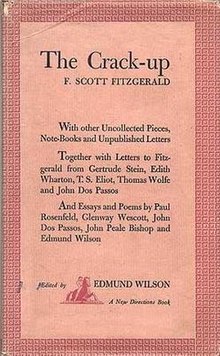
Around 1935 Fitzgerald wrote an autobiographical essay called “My Lost City” that said: “I once thought there were no second acts in American lives, but there was certainly to be a second act to New York’s boom days.” In 1945 that text was published in the posthumous collection The Crack-Up.

In addition, the notes that Edmund Wilson published with The Last Tycoon after he reconstructed Fitzgerald’s unfinished manuscript included this line: “There are no second acts in American life.” It’s not clear to me how closely that scrap was connected to that novel, but Wilson thought it was.

The line as published with The Last Tycoon has become famous. But the line in “My Lost City” suggests Fitzgerald was reconsidering that observation, or at least didn’t think it applied everywhere.

Furthermore, we’ve attached a different significance to the line. We tend to interpret the “second act” as meaning a comeback, a second chance, or more of someone’s story.

However, in “My Lost City” the “second act” that Fitzgerald described was the early years of the Great Depression when New Yorkers were feeling the effects of the stock market crash. People he had just described as being worth millions in stock were back at their laboring jobs.
Full of vaunting pride the New Yorker had climbed here and seen with dismay what he had never suspected, that the city was not the endless succession of canyons that he had supposed but that it had limits—from the tallest structure he saw for the first time that it faded out into the country on all sides, into an expanse of green and blue that alone was limitless. And with the awful realization that New York was a city after all and not a universe, the whole shining edifice that he had reared in his imagination came crashing to the ground.
Fitzgerald himself was struggling in these years, no longer the golden boy of American fiction and beset by personal problems.

As Fitzgerald used the phrase, there was a “second act” in American life, even if it tended to catch Americans by surprise. And that second act was a reckoning, not an encore.

22 August 2023

Baum’s Contradictory Characters

In my Characters of Oz essay “A Good Man but a Bad Wizard?: The Shifting Moral Character of the Wizard of Oz,” I took the opportunity to talk about L. Frank Baum’s successful characterizations in general:
Baum built most of his best characters around contradictions. Ozma looks and plays like a young girl, but she is a dedicated monarch and, later books say, a powerful fairy. The Scarecrow and the Patchwork Girls are literally dummies made of cloth, straw, and cotton, yet they are among the most intelligent people in Oz. The Tin Woodman is metallic but warm-hearted. The Shaggy Man is a hobo proud of his ragged appearance. Jack Pumpkinhead is a tall man with the mind of a child. Tik-Tok the robot is utterly reliable and liable to run down at any moment. Even Dorothy is a paradox, a simple little girl who spends most of the first books in the series deposing one ruler after another like Napoleon sweeping through Europe.

Resolving those paradoxes, Baum came to understand, rendered the characters far less interesting. The Wonderful Wizard of Oz settled the contradiction inherent in the personality of the Cowardly Lion by dosing him with courage, leaving him as a stereotypically brave lion ruling the forest. That character was no longer as compelling, and he had no role in the next book. When Baum brought the Lion back in Ozma of Oz, the first thing the character says is to assure Dorothy and readers that he’s “As cowardly as ever.”
(That’s my original text. The printed page says, “Tik-Tok the robot is utterly unreliable,” shifting the contradictory fulcrum within the sentence by a couple of words. I’d never want to call Tik-Tok that when he could hear me—i.e., when he’s wound up. It’s not his fault that other people neglect to wind him.)

Of course, in the essay I then had to tackle why Baum resolved the interesting contradiction he originally built into the character of the humbug wizard by making him a real wizard. And does that make the Wizard uninteresting?

15 August 2023

“Dorothy the Conqueror” Now Online

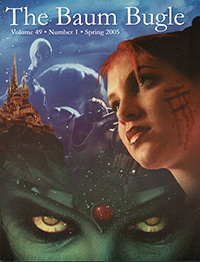
Back in 2005, the International Wizard of Oz Club’s journal, The Baum Bugle, published my article “Dorothy the Conqueror.”

It discussed the character of Dorothy Gale as L. Frank Baum developed her, from a little girl who called herself “small and meek” into a bold adventurer. That boldness had always been part of her character, but after her first trip to Oz she knew it. By the end of Baum’s series, she was happy to set out for unknown parts of Oz because “all excitement is fun.”

The article also points out ways that the MGM movie’s treatment of Dorothy doesn’t reflect that character, especially in her baffling speeches at the end.

The Oz Club has now made the text of “Dorothy the Conqueror” available for anyone to read through this webpage. It even comes with citations in both Chicago and MLA style.

18 July 2023

Call for Presentations at the CharlOz Festival

On September 27-29, 2024, the city of Charlotte, North Carolina; the University of North Carolina at Charlotte; and other organizations, local and national, will host CharlOz, a three-day festival exploring The Wonderful World of Oz and its cultural legacy.

The event is now open to proposals for presentations on almost any aspect of Oz, particularly:
  • History and Culture: Oz’s reflection of American history and/or culture
  • Social and Economic: Aspects of Oz relating to race, class, disability, or childhood
  • Visual and Performing Arts: Analysis of the visual or performing arts as they relate to Oz
  • Literary Arts: Authors and/or illustrators who have adapted Oz, and how those adaptations fit into the larger framework Oz provides
  • Gender Studies: Oz themes that examine gender roles/norms/traditions and sexualities, including LGBTQIA+ Oz portrayals of education, love, herosim, self-reliance, and teamwork
  • Technology: Application of non-traditional technologies that include podcasts, games, making, or other examinations of how varied technology transforms Oz themes
  • Mass-Marketing: Presentations of how a creator’s mass-marketed Oz work fits within the larger Oz world
Presentations can take the form of individual talks, group talks, workshops, roundtables, or panels.

The guidelines for submitting a 250-word proposal are on this page. The submission deadline is November 17, 2023. The organizing committee will respond to submitters by the end of January.

11 July 2023

Contents of The Characters of Oz

Last week I introduced The Characters of Oz, a collection of essays that I contributed to, edited by Dina Schiff Massachi.

Since I don’t yet see this information on the web in a form easy to search out, I’m sharing the contents of this book.
  • Introduction — Dina Schiff Massachi
  • Dorothy and the Heroine’s Quest — Mark I. West
  • But First, There Was a Scarecrow... — Katharine Kittredge
  • Heart Over Head: Evolving Views on Male Emotional Intelligence and the Tin Woodman — Dina Schiff Massachi
  • The Proto-Sissy, the Sissy, and Macho Men: The Cowardly Lion in The Wonderful Wizard of Oz, the MGM The Wizard of Oz, and Dark Oz Stories — Dee Michel and James Satter
  • A Good Man but a Bad Wizard? The Shifting Moral Character of the Wizard of Oz — J. L. Bell
  • Witches, Wicked and Otherwise — Robert B. Luehrs
  • Witch's Familiars or Winged Warriors? Liberating the Winged Monkeys — Dina Schiff Massachi
  • Glinda and Gender Performativity — Walter Squire
  • Ozma, Sorceresses, and Suffrage: Women, Power, and Politics in L. Frank Baum's Land of Oz — Mary Lenard
  • A Living Thing: The Very American Invention of Jack Pumpkinhead — Paige Gray
  • Trading Knitting Needles for Pistols: The Feminist, Violent, and Sexual Evolution of General Jinjur — Shannon Murphy
  • The Nome King — Angelica Shirley Carpenter
  • Piecing Together the Patchwork Girl of Oz — Gita Dorothy Morena
  • Afterword: Frank and His Imagination — Robert Baum
  • Bibliography: Further Oz Readings, Fiction and Nonfiction — Dina Schiff Massachi
In other (surprising) news about this book, it’s been printed, and McFarland is taking orders.

04 July 2023

The Characters of Oz and the Character of Oz the Wizard

Later this year McFarland will publish The Characters of Oz: Essays on Their Adaptation and Transformation, edited by Dina Schiff Massachi of the University of North Carolina at Charlotte.

The publisher says, “This collection of essays follows Baum’s archetypal characters as they’ve changed over time in order to examine what those changes mean in relation to Oz, American culture and basic human truths.”

Among those essays is my own “A Good Man But a Bad Wizard?: The Shifting Moral Character of the Wizard of Oz.”

One of the few lines that appeared in both L. Frank Baum’s original novel and the 1939 MGM movie was the Wizard’s insistence that he was “a good man, but a bad wizard.” Within that first novel the Wizard was a humbug whom people believed in, a tyrant who benefited his people, but ultimately someone Dorothy couldn’t rely on.

Just a few years later, however, the American public knew the Wizard of Oz unambiguously as a bad man in the Wizard of Oz stage extravaganza. And a few years after that, Baum brought the Wizard back as a stalwart friend for Dorothy and eventually a real magic-worker. This essay analyzes those changes in his persona across media and moral boundaries.

Other articles in this collection include Katharine Kittredge on Dorothy, Dee Michel and James Satter on the Cowardly Lion, Walter Squire on Glinda, Paige Gray on Jack Pumpkinhead, and Angelica Carpenter on the Nome King, among many other experts. Dina Massachi wrangled the contributors and provided her own exploration of the Winged Monkeys.